
Melacoryphus
Slater, 1988
Species Guides
7- Melacoryphus admirabilis(Admirable Seed Bug)
- Melacoryphus circumlitus
- Melacoryphus facetus
- Melacoryphus lateralis(Charcoal Seed Bug)
- Melacoryphus nigrinervis(Black-veined Seed Bug)
- Melacoryphus rubicollis
- Melacoryphus rubrolimbatus
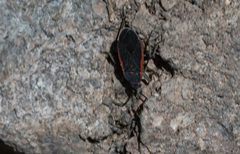
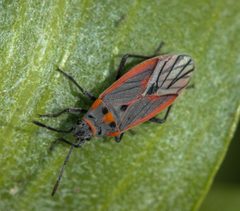
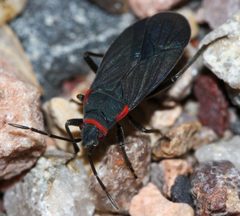
Melacoryphus is a of seed bugs in the Lygaeidae, established by Slater in 1988. The genus comprises approximately 11 described distributed in Central and North America. Species within this genus are small to medium-sized true bugs with seed-feeding habits typical of the family. The genus was erected to accommodate species previously placed elsewhere, with Melacoryphus lateralis serving as the type species.
Pronunciation
How to pronounce Melacoryphus: /mɛlækoʊrɪfʌs/
These audio files are automatically generated. While they are not always 100% accurate, they are a good starting point.
Identification
Melacoryphus can be distinguished from other Lygaeidae by subtle structural characters rather than coloration alone. Examination of genitalia and wing venation patterns is typically required for definitive identification to species. The genus is superficially similar to other genera such as Jadera and Boisea, but differs in specific morphological details of the , pronotum, and male genital structures.
Images
Distribution
Central America and North America.
Similar Taxa
- JaderaBoth are seed-feeding true bugs with similar body plans and coloration; Jadera such as J. haematoloma (Red-shouldered Bug) are frequently mistaken for Melacoryphus species in the field. Structural characters of the and pronotum separate the .
- BoiseaBoxelder bugs in this share similar size, coloration, and seed-feeding with Melacoryphus; both are sometimes referred to as 'soapberry bugs' though this term more properly applies to Rhopalidae. Boisea have distinct pronotal and wing markings that differ from Melacoryphus.
Sources and further reading
- BugGuide
- Wikipedia
- GBIF taxonomy match
- iNaturalist taxon
- NCBI Taxonomy
- Catalogue of Life
- Bug Eric: Red-shouldered Bug
- Bug Eric: Last Hurrah or New Normal?
- Nesting of Dark-billed Cuckoo (<i>Coccyzus melacoryphus</i>) on Isabela Island, Galapagos, Ecuador Anidación del Cuclillo Canela (<i>Coccyzus melacoryphus</i>) en la Isla Isabela, Galápagos, Ecuador
- Breeding biology of the Dark-billed Cuckoo Coccyzus melacoryphus (Aves: Cuculidade) in a semi-arid Neotropical region