Melacoryphus lateralis
(Dallas, 1852)
Charcoal Seed Bug, Black-and-red Seed Bug
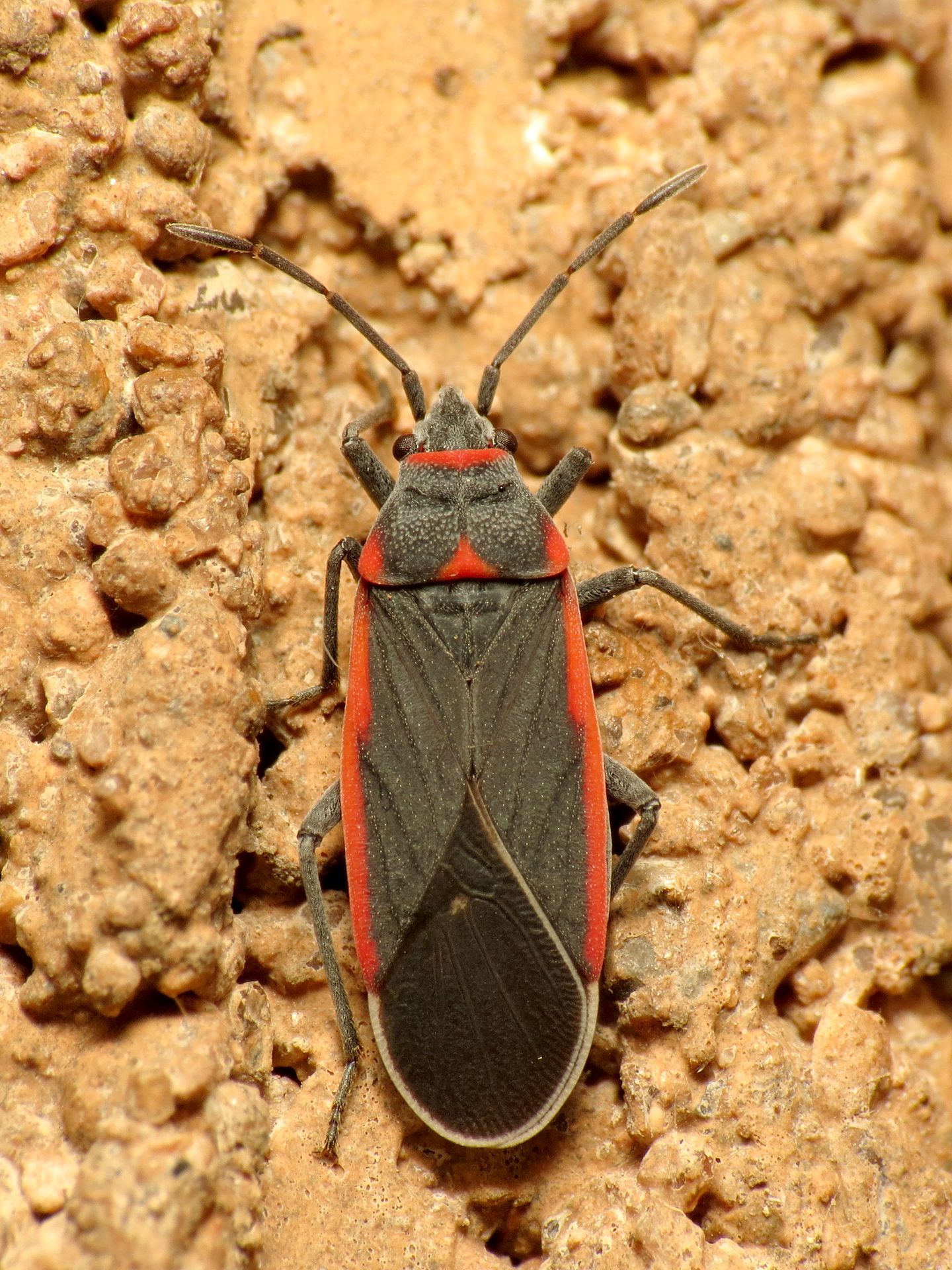
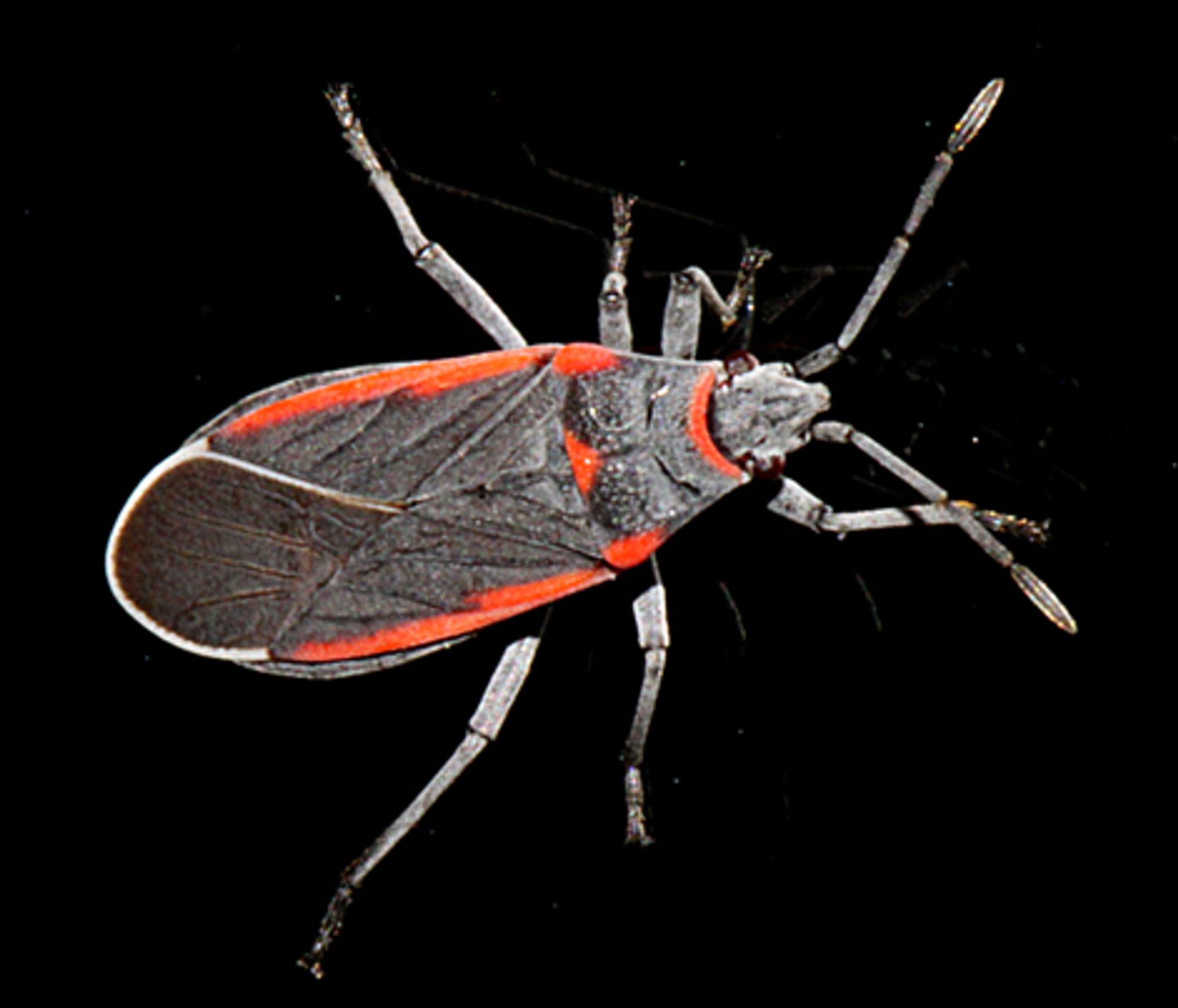
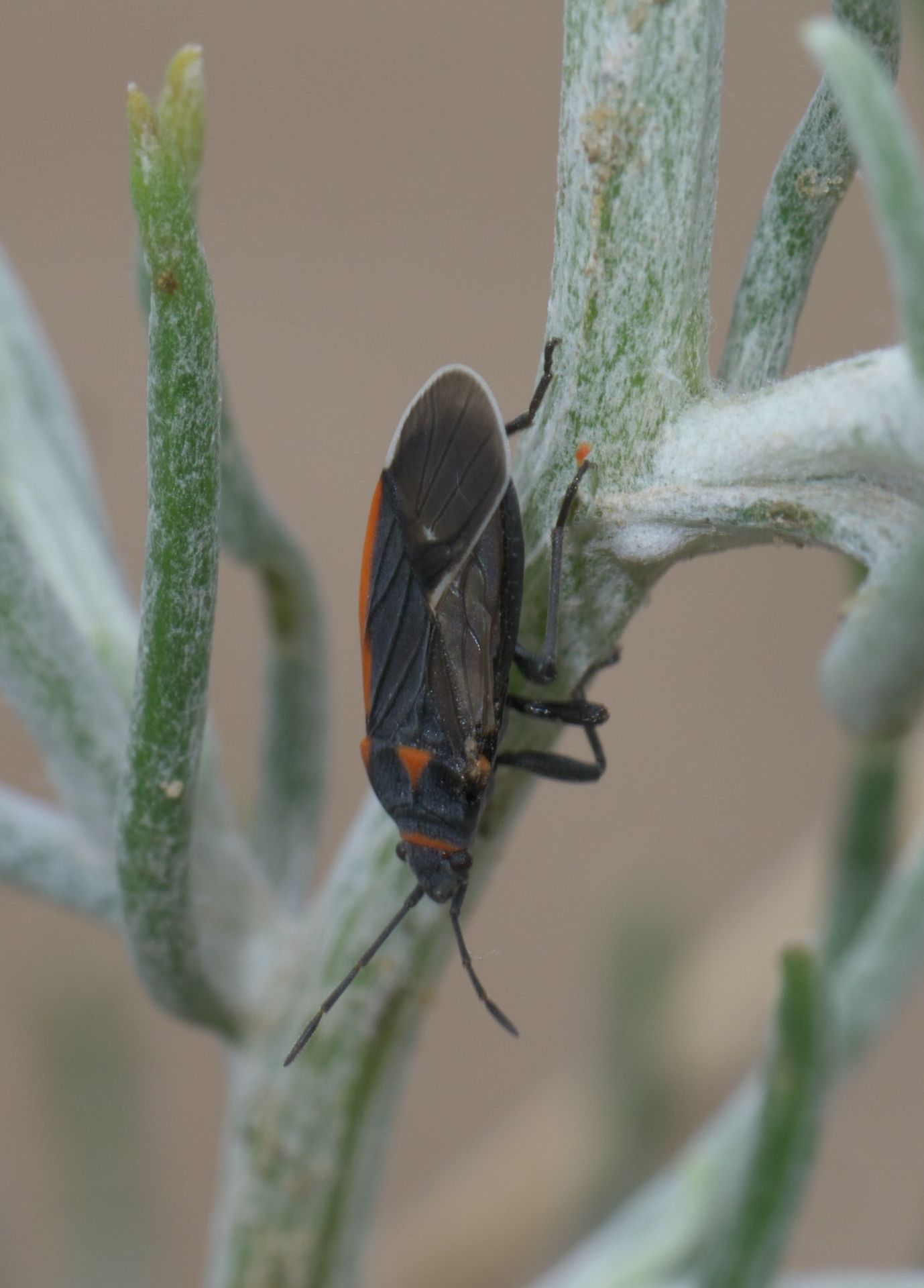
Melacoryphus lateralis is a of true in the Lygaeidae, commonly known as the charcoal or black-and-red seed bug. Native to desert regions of western North America, this species is recognized by its distinctive black body fringed with red and gray coloration, resembling a dying ember. are known to appear in large during late summer. The species is closely related to the small milkweed bug (Lygaeus kalmii) and shares similar coloration patterns with other lygaeid seed bugs.
Pronunciation
How to pronounce Melacoryphus lateralis: //mɛləˈkɔrɪfəs læˈtɛrəlɪs//
These audio files are automatically generated. While they are not always 100% accurate, they are a good starting point.
Identification
Distinguished from the small milkweed bug (Lygaeus kalmii) and other black-and-red lygaeids by specific pattern of marginal coloration and body proportions. The charcoal-like coloration with red and gray fringing is distinctive. Close examination of genitalia or wing venation may be required for definitive separation from similar Melacoryphus . in late summer in desert provide a behavioral clue.
Images
Appearance
are predominantly black with red and gray markings along the margins, creating a charcoal-like appearance. Body length ranges from 1.5 mm to 12 mm. The surface is dark with contrasting pale or reddish lateral edges. The wings are fully developed in most individuals, covering the .
Habitat
Arid and semi-arid desert environments of western North America. Found in open, dry areas with sparse vegetation. Often observed on the ground, rocks, and low vegetation. Appears to favor disturbed or open within desert .
Distribution
Native to western North America, including desert regions of the southwestern United States and adjacent Mexico. Records from California, Arizona, and other arid western states. Distribution corresponds to the Sonoran and Mojave Desert regions and similar arid zones.
Seasonality
are most conspicuous in late summer, when may form large . Activity patterns likely track seasonal moisture and temperature conditions in desert environments. Specific stage not documented in available sources.
Diet
Feeding habits inferred from -level traits; specific plants for M. lateralis not documented in available sources. As a lygaeid , likely feeds on seeds of desert plants, but specific hosts remain unconfirmed.
Life Cycle
Developmental stages include , nymph (with multiple instars), and . Specific details on number of instars, egg-laying , and developmental timing not documented for this . likely adapted to seasonal patterns of desert environments.
Behavior
Forms large in late summer, sometimes covering extensive areas of ground, rocks, and vegetation. Has been observed in mass emergences or accumulations in desert washes and trails. Individuals are reportedly durable, capable of surviving physical disturbance.
Ecological Role
Likely functions as a seed in desert . may represent resource tracking or pre- . Specific ecological impacts not quantified in available literature.
Human Relevance
Occasional nuisance when occur in recreational areas or near human habitation in desert regions. Not known to cause economic damage to crops. No medical importance documented.
Similar Taxa
- Lygaeus kalmii (Small Milkweed Bug)Similar black-and-orange/red coloration and body shape; distinguished by specific pattern details and associations with milkweeds
- Melacoryphus nigrinervis with similar overall appearance; requires close morphological examination for separation
- Boisea spp. (Boxelder Bugs)Similar and color pattern, but in Rhopalidae; distinguished by broader body and different wing structure
More Details
Aggregation Behavior
Mass in late summer are a notable feature of this , sometimes involving thousands of individuals covering ground surfaces and low vegetation in desert .
Common Names
The name 'charcoal ' refers to the distinctive black body with red and gray margins resembling a dying ember; 'black-and-red seed bug' is a more general name applied to several lygaeid with similar coloration.
Sources and further reading
- BugGuide
- Wikipedia
- GBIF taxonomy match
- iNaturalist taxon
- NCBI Taxonomy
- Catalogue of Life
- A New Cockroach in Town? | Bug Squad
- Bug Eric: Red-shouldered Bug
- Recent literature – The Coleopterists Bulletin | Beetles In The Bush
- Bug Eric: Last Hurrah or New Normal?
- venomous snakes | Blog
- Cimbicidae | Beetles In The Bush