
Nabis rufusculus
Reuter, 1872
Short-winged Nabis
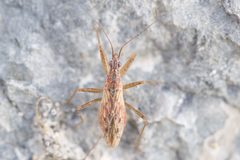
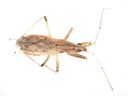
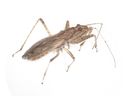
Nabis rufusculus is a of damsel bug in the Nabidae, commonly known as the Short-winged Nabis. It is a small predatory true found in North American agroecosystems, particularly alfalfa and soybean fields. The species has been studied for its and abundance patterns alongside N. americoferus and N. roseipennis. Like other damsel bugs, it is an economically important in agricultural systems.
Pronunciation
How to pronounce Nabis rufusculus: //ˈneɪ.bɪs ruːˈfʌs.kjuː.ləs//
These audio files are automatically generated. While they are not always 100% accurate, they are a good starting point.
Identification
Nabis rufusculus can be distinguished from similar damsel bugs by its wing . As the suggests, it is characterized by short wings (brachypterous condition), a trait that separates it from fully-winged . The of the front leg is muscular and swollen with teeth on the underside for prey capture. Unlike plant bugs (Miridae), damsel bugs lack the —a notch in the front wing margin where the leathery portion meets the . Nabis rufusculus is smaller than most assassin bugs (Reduviidae) and lacks their curved rostrum.
Images
Habitat
Alfalfa and soybean agroecosystems. Damsel bugs in the Nabis are also found in diverse including grasslands, meadows, and open fields.
Distribution
North America, with records from the United States including Vermont and California.
Diet
Predatory on other insects. As a member of Nabidae, it feeds on small prey including aphids, leafhoppers, and other soft-bodied insects. One observation documents a Nabis sp. with leafhopper prey.
Life Cycle
Overwinters as an . Adults have been observed from early spring through late fall.
Behavior
. Attracted to lights at night, likely to prey on other insects drawn there. Solitary rather than swarming. Uses muscular front legs with toothed to secure prey. Timid and not prone to biting humans.
Ecological Role
in agricultural . Considered economically important for biological pest control in crop systems. Preys on agricultural pests including lygus bugs, aphids, and leafhoppers.
Human Relevance
Beneficial insect in agriculture. Used in biological pest management in alfalfa and soybean production. Naturally occurring help suppress pest insects without chemical intervention.
Similar Taxa
- Nabis americoferus with similar and use in alfalfa and soybean systems; distinguished by wing length and genitalic characters
- Nabis roseipennis studied alongside N. rufusculus; larger and fully winged, with different patterns
- Pagasa spp.Ground-dwelling damsel bugs with similar predatory habits but more -like appearance and fossa spongiosa on front tibiae
- Miridae (plant bugs)Similar size and shape but distinguished by presence of on forewing and plant-feeding habit
- Reduviidae (assassin bugs)Similar predatory habit but generally larger with curved rostrum and different front leg structure
More Details
Wing polymorphism
Nabis rufusculus exhibits brachyptery (short-winged condition), which distinguishes it from fully-winged and affects its capability.
Parasitoid associations
The is known to be parasitized by , with studied alongside phenology in agricultural systems.
Sources and further reading
- BugGuide
- Wikipedia
- GBIF taxonomy match
- iNaturalist taxon
- NCBI Taxonomy
- A Big Cheer for a Crab Spider | Bug Squad
- Bug Eric: Damsels That Cause Distress
- Bug Eric: My Kind of Fourth of July
- Bug Eric: Blacklighting Already?
- Bug Eric: July 2019
- Phenology and Abundance of Nabis americoferus, N. roseipennis, and N. rufusculus (Hemiptera: Nabidae) and Their Parasitoids in Alfalfa and Soybean