
Balclutha
Kirkaldy, 1900
Species Guides
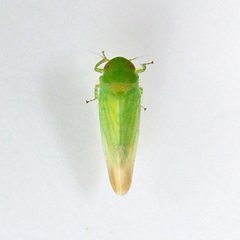
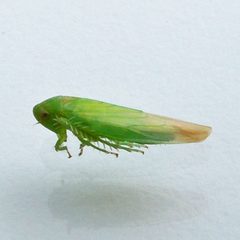
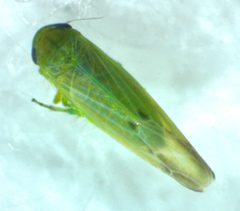
21Balclutha is a large of leafhoppers in the Cicadellidae, with over 100 and a distribution. The genus is named after Balclutha, Scotland. These small insects are primarily associated with grasses and sedges (Poaceae), and several species have become economically significant as pests of cereal crops, particularly rice. Some species are known of plant , including phytoplasmas affecting grapevine and other crops. The genus includes both native and introduced species, with several documented cases of recent range expansion through international trade.
Pronunciation
How to pronounce Balclutha: //bælˈkluːθə//
These audio files are automatically generated. While they are not always 100% accurate, they are a good starting point.
Identification
-level identification as Balclutha requires association with grass and general leafhopper . identification is challenging and typically requires: (1) examination of male genitalia ( shape is diagnostic), (2) analysis of wing venation and color pattern, and (3) geographic context. For example, B. incisa and B. rubrostriata are closely similar but distinguishable by aedeagus morphology. Molecular identification using COI barcodes is increasingly employed, with reference sequences available in BOLD for several species.
Images
Habitat
Primarily grassland including native prairies, meadows, and agricultural settings. Strongly associated with Poaceae (grasses and sedges). Documented from rice paddies, crab grass (Digitaria sanguinalis), veldt grass (Ehrharta longiflora), crimson fountain grass (Pennisetum setaceum), and various cereal crops.
Distribution
distribution with native across Africa, Asia, Europe, and the Americas. Documented range expansions include: B. jafara from Seychelles/Africa to Florida and Colombia by 2019; B. brevis as allochthonous in Sicily and mainland Europe; B. rubrostriata spreading in Texas and Louisiana. Specific distribution varies by .
Seasonality
Activity patterns vary by region and . In south-western Australia, B. incisa mating and oviposition occurs in late summer to early winter (February–August). In temperate regions, activity generally follows grass growing seasons.
Diet
Phloem-feeding herbivores specializing on Poaceae (grasses and sedges). Documented include rice (Oryza sativa), crab grass (Digitaria sanguinalis), veldt grass (Ehrharta longiflora), and crimson fountain grass (Pennisetum setaceum).
Host Associations
- Oryza sativa - feeds onCommercial rice paddies; major economic
- Digitaria sanguinalis - feeds onCrab grass; documented in Western Australia
- Ehrharta longiflora - feeds onVeldt grass; documented in Western Australia
- Pennisetum setaceum - feeds onCrimson fountain grass; in Italy
- Poaceae - feeds onGeneral association for most
Life Cycle
Behavior
Phloem-feeding on grasses produces characteristic feeding damage. Some exhibit calling and duetting behavior (documented in B. incisa), potentially providing opportunity for female mate choice. readily disperse, facilitating rapid range expansion.
Ecological Role
Herbivores that convert grass to insect biomass; significant prey for various including damsel bugs (Nabis kinbergii) and muscid flies (Coenosia spp.). Some serve as for plant including phytoplasmas ('Candidatus Phytoplasma solani' causing 'bois noir' in grapevine; 'Candidatus Phytoplasma hispanicum' associated with cauliflower stunt). parasitized by trichogrammatid wasps (Oligosita balcluthae).
Human Relevance
Several are agricultural pests of rice and other cereals, causing direct feeding damage and transmitting plant viruses and phytoplasmas. B. incisa, B. hebe, and related species are monitored for their potential. International trade in plant products has facilitated introduction of non-native species (e.g., B. jafara in Florida). Some species have been investigated as targets for .
Similar Taxa
- ErythroneuraBoth are small, colorful leafhoppers; Erythroneura are typically associated with woody plants rather than grasses, and often have more intricate wing reticulation
- GraphocephalaSimilar size and wing patterning; Graphocephala often have more pronounced longitudinal stripes and different associations (often woody plants)
- MacrostelesSame tribe (Macrostelini) and similar grass-feeding ; requires genital examination for definitive separation
More Details
Pathogen Transmission
Multiple Balclutha have been implicated as affecting economically important crops. B. incisa transmits 'Candidatus Phytoplasma solani' to grapevine; B. hebe is a potential of 'Candidatus Phytoplasma hispanicum' to cauliflower.
Virome Characterization
B. incisa harbors at least four novel viruses: two ollusviruses (BiOV1, BiOV2), one iflavirus (BiIV1), and one totivirus (BiTV1). The ecological significance of these viruses remains under investigation.
Reproductive Biology
Detailed morphostructural studies exist for B. brevis and B. incisa, documenting sperm bundle formation, transfer to female bursa copulatrix, and in some .
Taxonomic Complexity
The has a complicated taxonomic history with multiple synonymies and misidentifications. Molecular data (COI barcodes) have helped clarify boundaries, particularly for introduced .
Sources and further reading
- BugGuide
- Wikipedia
- GBIF taxonomy match
- iNaturalist taxon
- NCBI Taxonomy
- Catalogue of Life
- Bug Eric: Grand Finale
- Bug Eric: 2024
- Balclutha jafara (Hemiptera: Cicadellidae): integrative identification of a species introduced in the Western Hemisphere, and notes on other Balclutha
- Identification and Characterization of Four Novel Viruses in Balclutha incisa
- Morphostructural investigation on spermatozoa and sperm bundles of the leafhopper Balclutha brevis Lindberg 1954 (Hemiptera: Deltocephalinae)
- Calling and Duetting Behavior in the Leafhopper Balclutha incisa (Hemiptera: Cicadellidae: Deltocephalinae): Opportunity for Female Choice?
- Taxonomic notes on the leafhopper genus Balclutha Kirkaldy (Hemiptera: Cicadellidae) from Pakistan with a new country record
- Morphostructural analysis of the male reproductive system and DNA barcoding in Balclutha brevis Lindberg 1954 (Homoptera, Cicadellidae)
- Description of a new species of Oligosita Walker (Chalcidoidea: Trichogrammatidae), egg parasitoid of Balclutha brevis Lindberg (Homoptera: Cicadellidae) living on Pennisetum setaceum, from Italy
- Morphostructural investigation of the female reproductive system and molecular evidence for Wolbachia in Balclutha brevis Lindberg 1954 (Hemiptera, Cicadellidae)
- Biology and natural enemies of the leafhopper Balclutha incisa (Matsumura) (Hemiptera: Cicadellidae: Deltocephalinae) in south‐western Australia
- Rapid Spread ofBalclutha rubrostriata(Hemiptera: Cicadellidae) in Texas and Southwestern Louisiana, USA with Notes on its Associated Host Plants
- Report of ‘Candidatus Phytoplasma hispanicum’ (16SrXIII-E) Associated with Cauliflower Stunt in São Paulo State, Brazil, and Balclutha hebe as Its Potential Vector