
Physiphora alceae
(Preyssler, 1791)
picture-winged fly
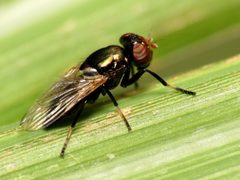
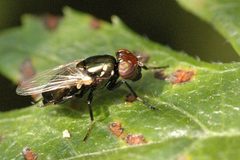
Physiphora alceae is a small picture-winged fly in the Ulidiidae, notable for lacking the bold wing patterns typical of its family. Approximately 5 millimeters in length, this has become through human-mediated . Males perform elaborate courtship dances involving foreleg movements, wing lifting, and physical contact with females.
Pronunciation
How to pronounce Physiphora alceae: /fɪˈsɪfəɹə ˈælsiˌaɪ/
These audio files are automatically generated. While they are not always 100% accurate, they are a good starting point.
Identification
Distinguished from other Ulidiidae by the absence of prominent wing markings. Most picture-winged flies display distinct patterns of spots, bars, or lines on the wings, which P. alceae lacks. Separable from other Physiphora by detailed morphological features; consult taxonomic keys for definitive identification.
Images
Appearance
Small fly approximately 5 millimeters in length. Lacks the bold spots, bars, or lines on the wings that characterize most picture-winged flies. Wing patterns, if present, are subdued or absent. Body form typical of ulidiid flies.
Habitat
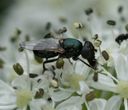
have been observed on flowers. Larval development occurs in decaying plant matter and animal .
Distribution
distribution; established across multiple continents including North America, Europe, and other regions through unintentional introduction. Native range uncertain due to widespread .
Diet
Larvae feed on decaying plant and animal material. Specific feeding habits not documented.
Life Cycle
Larval stage develops in decaying organic substrates including plant matter and . Complete with , larva, pupa, and stages; detailed chronology not documented.
Behavior
Males court females with elaborate displays: moving forelegs up and down, shaking forelegs, turning sideways while lifting one wing, tapping the female's or , and probing with the . visit flowers.
Ecological Role
Saprophagous decomposer; larvae break down decaying organic matter.
Human Relevance
Non-pest ; no documented economic or medical significance. distribution suggests association with human activities.
Similar Taxa
- Ceroxys latiusculusBoth are small ulidiid flies, but C. latiusculus has distinct wing patterns and develops in Senecio seed rather than decaying matter.
- Delphinia pictaSimilar size and compost-breeding habit, but D. picta has patterned wings and is common in gardens of eastern North America.
- Other Physiphora speciesMost Afrotropical have different coloration and are associated with rotting palm tissues or giant Euphorbia rather than general decaying matter.
More Details
Taxonomic note
The Physiphora includes at least 29 , predominantly Afrotropical. P. alceae and P. clausa are the only subcosmopolitan species, having spread beyond their native ranges through unintentional introduction.
Wing pattern anomaly
Unlike most ulidiids, which are named for and identified by their striking wing patterns, P. alceae represents an atypical lineage within the where wing ornamentation has been reduced or lost.