
Physiphora
Fallén, 1810
Species Guides
2- Physiphora alceae(picture-winged fly)
- Physiphora clausa
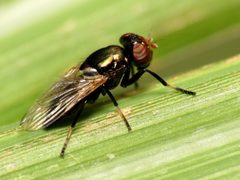
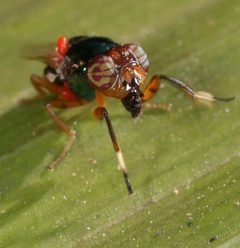
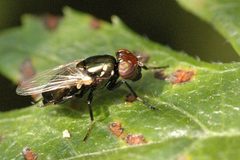
Physiphora is a of picture-winged flies (Ulidiidae) containing at least 29 , predominantly distributed in the Afrotropical Region. Two species—P. alceae and P. clausa—have become subcosmopolitan through human-mediated introduction. The genus is notable for its atypical wing patterns: unlike many ulidiids, Physiphora species lack bold wing markings. Larvae are saprophagous, developing in rotting tissues of palms, giant Euphorbia, baobabs, and poplars; some species are attracted to ungulate , though larval development in dung remains unconfirmed.
Pronunciation
How to pronounce Physiphora: //ˌfaɪ.zɪˈfɔː.rə//
These audio files are automatically generated. While they are not always 100% accurate, they are a good starting point.
Identification
Distinguished from other Ulidiidae by the relative lack of bold wing markings—most picture-winged flies exhibit conspicuous spots, bars, or lines on wings, whereas Physiphora show reduced patterning. P. alceae specifically can be identified by its small size (5 mm), plain wings, and presence on flowers. Separation from similar genera such as Ceroxys, Delphinia, and Callopistromyia relies on wing pattern reduction and, where known, ecological associations with rotting palm tissues or .
Images
Appearance
Small to medium-sized flies, approximately 5 millimeters in length (based on P. alceae). Wings lack the bold spots, bars, or lines characteristic of many other picture-winged flies; wing patterns are reduced or absent. Body coloration and specific morphological features vary by .
Habitat
Associated with rotting plant tissues, particularly palms (often infested by palm weevils), giant Euphorbia, baobabs, and poplars. Some attracted to ungulate , which may serve as larval development sites or feeding/ sites. Adults of P. alceae observed on flowers.
Distribution
Predominantly Afrotropical Region, with native also occurring in other Old World regions extending to the Solomon Islands. P. alceae and P. clausa are subcosmopolitan, introduced to and established in the Australasian, Nearctic, and Neotropical Regions. P. alceae specifically is and occurs throughout the United States.
Diet
Larvae are saprophagous, feeding on rotting tissues of palms, giant Euphorbia, baobabs, and poplars. feeding habits largely undocumented; P. alceae adults observed on flowers, suggesting possible nectar feeding.
Host Associations
- palms - larval development in rotting tissuesoften infested by palm weevils
- giant Euphorbia - larval development in rotting tissues
- baobabs - larval development in rotting tissues
- poplars - larval development in rotting tissues
- ungulate dung - attraction; possible larval developmentlarval development in unconfirmed
Life Cycle
Holometabolous. Larvae develop in rotting plant tissues (palms, Euphorbia, baobabs, poplars). and details undocumented at level. P. alceae adults seek winter shelter in buildings during fall in temperate regions.
Behavior
P. demandata exhibits complex courtship involving elaborate mating rituals. Some attracted to ungulate . P. alceae enter buildings in fall to seek winter shelter. Adults of at least one species (P. alceae) frequent flowers.
Ecological Role
Decomposer and saprophage, contributing to breakdown of rotting plant tissues in palm, Euphorbia, baobab, and poplar . Potential role in decomposition, though larval development in dung requires confirmation.
Human Relevance
P. alceae is a associated with human-disturbed environments; invade buildings in fall seeking winter shelter, potentially causing minor nuisance. No significant pest status documented for the ; not known to damage crops or transmit .
Similar Taxa
- CeroxysSimilar size and general body plan; distinguished by Ceroxys having bold wing bars and patterns absent in Physiphora
- DelphiniaBoth small to medium ulidiids; Delphinia exhibits distinct wing patterns and breeds in decaying organic matter/compost rather than rotting woody tissues
- CallopistromyiaSimilar size range; Callopistromyia display elaborate wing patterns and conspicuous perpendicular wing displays during courtship, and patterns not reported for Physiphora
- Tephritidae (fruit flies)Similar size and wing presence; distinguished by -level characters including wing venation and, in many Tephritidae, more elaborate wing patterns with distinct costal bands or spots
More Details
Taxonomic History
Ulidiidae was formerly known as ; older references place Physiphora in Otitidae. The was revised in 2016, with twelve new Afrotropical described and several synonymies established.
Species Diversity
At least 29 recognized; twelve described as new in 2016 revision. Most species remain poorly known biologically, with detailed data available primarily for the P. alceae and the behaviorally studied P. demandata.