
Delphinia
Robineau-Desvoidy, 1830
picture-winged flies
Species Guides
1- Delphinia picta(Common Picture-winged Fly)
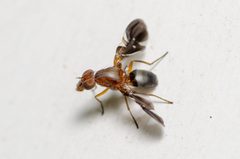
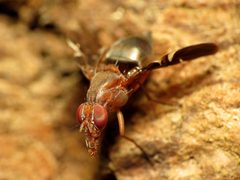
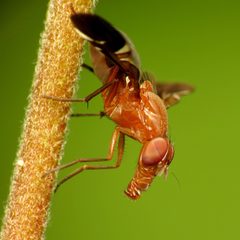
Delphinia is a monospecific of picture-winged flies in the Ulidiidae. The sole , Delphinia picta, is a native North American fly 7-8 millimeters in length with distinctive patterned wings. It is frequently mistaken for fruit flies (Tephritidae) due to its wing markings. The genus is notable for being one of the most common and widespread ulidiids in eastern North America.
Pronunciation
How to pronounce Delphinia: //dɛlˈfɪniə//
These audio files are automatically generated. While they are not always 100% accurate, they are a good starting point.
Identification
Delphinia picta can be distinguished from similar picture-winged flies by its consistent presence in eastern North American gardens and forest edges, its association with decaying organic matter rather than living plant tissues, and its 7-8 mm size. It is most commonly confused with fruit flies (Tephritidae), from which it differs in -level characters including wing venation details. It may be separated from other Ulidiidae such as Ceroxys (western North America, associated with Senecio) and Idana (larger, 10-12 mm, associated with bird droppings and tree sap) by geographic range and associations.
Images
Appearance
are 7-8 millimeters in length with patterned wings bearing spots, bars, or lines typical of the Ulidiidae . The specific epithet 'picta' refers to the 'painted' or decorated wing appearance. Body coloration and detailed wing pattern specifics are not fully documented in available sources.
Habitat
Gardens, forest edges, and areas with decaying organic matter. are found on foliage or on the ground. The utilizes compost and similar decomposing substrates for breeding.
Distribution
Eastern and midwestern United States from Florida to Maine, westward through Kansas and Minnesota. Also recorded in Mexico and El Salvador. Not found in western North America where related such as Ceroxys predominate.
Seasonality
Active in spring and fall based on general patterns for temperate Ulidiidae; specific seasonal data for Delphinia picta not detailed in available sources.
Diet
Larvae develop in decaying organic matter such as compost. feeding habits are not documented in available sources.
Life Cycle
Larval development occurs in decaying organic matter, specifically compost. Details of , pupal, and longevity stages are not documented in available sources.
Behavior
are known to rest on foliage and the ground. Courtship involving wing displays, common in the Ulidiidae, have not been specifically documented for Delphinia picta.
Ecological Role
Contributes to decomposition through larval feeding in decaying organic matter. Serves as for gregarine (Cephaloidophora delphinia).
Human Relevance
Frequently mistaken for fruit fly pests, which may cause unnecessary concern. Non-pest that does not damage living plants or stored products. Common in gardens where compost is present.
Similar Taxa
- CeroxysWestern North American with similar wing patterns; differs in geographic range and larval association with Senecio seed
- IdanaLarger picture-winged fly (10-12 mm) associated with bird droppings and fermenting tree sap; differs in size and specific associations
- Tephritidae (fruit flies)Different with similar wing patterns; Delphinia picta is frequently mistaken for fruit fly pests but lacks their economic importance and specific wing venation characters
Misconceptions
Commonly mistaken for fruit flies ( Tephritidae) due to patterned wings, leading to misidentification as agricultural pests. This is erroneous as Delphinia picta is not a pest and does not infest fruits or commercial crops.
More Details
Taxonomic note
The Ulidiidae was formerly known as . This contains only one described , Delphinia picta.
Parasite association
The gregarine Cephaloidophora delphinia is named for and develops within this , indicating a specific parasite-host relationship.
Sources and further reading
- BugGuide
- Wikipedia
- GBIF taxonomy match
- iNaturalist taxon
- NCBI Taxonomy
- Catalogue of Life
- Bug Eric: Picture-winged Flies
- Picture-Winged Fly, Delphinia picta (Fabricius) (Insecta: Diptera: Ulidiidae (=Otitidae))
- The Development of Gregarines and Their Relation to the Host Tissues: (II) in Cephaloidophora delphinia (Watson)