
Physiphora clausa
(Macquart, 1843)
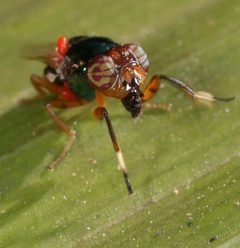
Physiphora clausa is a subcosmopolitan picture-winged fly in the Ulidiidae, originally described by Macquart in 1843. It is one of at least two Physiphora unintentionally introduced to the Australasian, Nearctic, and Neotropical Regions. The species was synonymized with Physiphora hainanensis in 2015. Larvae are saprophagous, developing in rotting plant tissues.
Pronunciation
How to pronounce Physiphora clausa: /fɪˈsɪfərə ˈklɔːsə/
These audio files are automatically generated. While they are not always 100% accurate, they are a good starting point.
Images
Habitat
Associated with rotting tissues of palms (often infested by palm weevils), giant Euphorbia, baobabs, and poplars; also attracted to and possibly develops in of ungulates
Distribution
Subcosmopolitan; native to Old World regions, unintentionally introduced into Australasian, Nearctic, and Neotropical Regions. Distribution records include Brazil (Rio de Janeiro), Hawaii, and conterminous United States
Diet
Saprophagous; larvae feed on rotting plant tissues
Life Cycle
Larvae develop in rotting tissues of palms, giant Euphorbia, baobabs, and poplars; possibly also in of ungulates
Ecological Role
Saprophagous decomposer in rotting plant material
Human Relevance
Unintentionally introduced to multiple regions; may occur in association with cultivated palms or other plants affected by palm weevils
Similar Taxa
- Physiphora alceaeOther subcosmopolitan Physiphora introduced to same regions; both lack bold wing markings typical of many ulidiids
Sources and further reading
- BugGuide
- GBIF taxonomy match
- iNaturalist taxon
- NCBI Taxonomy
- Catalogue of Life
- Bluelegged Grasshopper
- Bug Eric: Blue-legged Grasshopper
- Bug Eric: Picture-winged Flies
- The (almost) Florida-endemic Cicindelidia scabrosa | Beetles In The Bush
- Cimbicidae | Beetles In The Bush
- Revision of the Genus Physiphora Fallén 1810 (Diptera: Ulidiidae: Ulidiinae)