
Ceroxys latiusculus
(Loew, 1873)
narrow-banded picture-winged fly, picture-winged fly
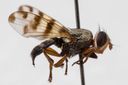
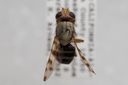
Ceroxys latiusculus, commonly known as the narrow-banded picture-winged fly, is a of ulidiid fly native to western North America. measure 9–12 mm and are recognized by their grayish-brown bodies, black with gray bands, and distinctively patterned wings. The species is frequently encountered as a nuisance pest when adults enter buildings in autumn to seek winter shelter. Larvae develop within the seed of Senecio plants.
Pronunciation
How to pronounce Ceroxys latiusculus: //sɛˈrɔksis lætiˈʊskʊlʊs//
These audio files are automatically generated. While they are not always 100% accurate, they are a good starting point.
Identification
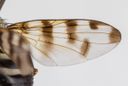
Distinguished from other picture-winged flies by the wing pattern: the dark bars are less complete than the "tiger-striped" pattern of Pseudotephretina . Larger than Delphinia picta (7–8 mm) and smaller than Idana marginata (10–12 mm). Often mistaken for the walnut husk fly. The combination of size, gray-banded black , and characteristic wing markings separates it from other Ulidiidae.
Images
Appearance
are 9–12 mm in length, comparable in size to a house fly but with slower movement. The body is grayish-brown overall. The is black with gray bands. The wings bear dark patterned markings that are the ' most notable visual feature. The and other body regions lack strong metallic coloration.
Habitat
Found in diverse outdoor environments across western North America. utilize tree trunks, fence rails, and logs as basking and display sites. Frequently enters human structures including homes, storage sheds, and vehicles during autumn. Observed on nectarine blossoms and other flowering plants.
Distribution
Common throughout western North America. Documented in Colorado, California, Arizona, and Hawaii. Ranges into southern California, New Mexico, Texas, and Utah. Presence confirmed in Birds Landing and Vacaville, California.
Seasonality
Most active in spring and fall. commonly found indoors from early fall through spring, often concentrated around windows. Observed on nectarine blossoms in late February.
Diet
Larvae feed on Senecio (groundsels, ragworts), developing within the seed . feeding habits are not documented.
Host Associations
- Senecio - larval larvae develop in seed
Life Cycle
Larval stage develops within seed of Senecio plants. Specific details of -laying, , and longevity are not documented.
Behavior
exhibit slow, deliberate movement compared to house flies. Males have been observed performing involving wing movements. Adults invade buildings in autumn, seeking winter shelter, and aggregate around windows. One individual was observed crawling on nectarine blossoms, possibly mimicking .
Ecological Role
Larval development in Senecio seed suggests a role in plant reproductive , though specific impacts are not quantified. may contribute to pollination through flower visitation.
Human Relevance
Considered a nuisance pest due to autumn invasion of homes, storage sheds, and vehicles. Frequently mistaken for the walnut husk fly. No documented agricultural or economic damage. Occasionally observed on ornamental nectarine trees.
Similar Taxa
- Pseudotephretina spp.Similar size and appearance, but wing bars are more complete and "tiger-striped"
- Delphinia pictaSmaller (7–8 mm), eastern U.S. distribution, breeds in decaying organic matter
- Idana marginataLarger (10–12 mm), northeastern U.S., associated with bird droppings and fermenting sap
- walnut husk flyFrequently confused with C. latiusculus; distinct with different
Misconceptions
Often mistaken for the walnut husk fly, though the two have different and economic significance.
More Details
Historical taxonomy
Ulidiidae was formerly known as ; older references use this name.