
Heringia
Rondani, 1856
Smoothleg Flies
Species Guides
2- Heringia canadensis(Canadian smoothleg)
- Heringia salax(Eastern Smoothleg)
Heringia is a of small hoverflies (Syrphidae) commonly known as Smoothleg Flies. occur in North America and Europe. Larvae are predatory on specific species, including woolly apple aphid (Eriosoma lanigerum), woolly elm aphid (Schizoneura), and aphids on poplar (Pemphigus) and fir (Dreyfusia). feed on honeydew and pollen. The genus is part of the "little black fly" group, with females generally unidentifiable to species.
Pronunciation
How to pronounce Heringia: /hɛˈrɪŋiə/
These audio files are automatically generated. While they are not always 100% accurate, they are a good starting point.
Identification
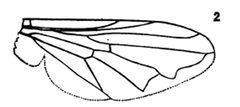
Distinguished from similar Trichopsomyia by bare anepisternum (pilose in Trichopsomyia). Straight with evenly rounded oral margin and very short frontal prominence separates it from related pipizine genera. Straight or nearly straight R4+5 (not dipped or spurred) and smooth legs without spines or spurs are diagnostic. Females cannot be identified to ; species-level identification restricted to males.
Images
Habitat
Associated with plants of prey aphids: apple orchards (Malus), elm (Ulmus), poplar (Populus), and fir (Abies). Larvae develop within colonies on these host plants.
Distribution
North America and Europe.
Diet
Larvae predatory on specific : Schizoneura aphids on Ulmus, Pemphigus aphids on Populus, Dreyfusia piceae on Abies, and Eriosoma lanigerum on Malus. feed on honeydew and pollen.
Host Associations
- Schizoneura - prey (larvae)aphids on Ulmus
- Pemphigus - prey (larvae)aphids on Populus
- Dreyfusia piceae - prey (larvae)on Abies
- Eriosoma lanigerum - prey (larvae)woolly apple aphid on Malus
- Ulmus - plant of prey aphids
- Populus - plant of prey aphids
- Abies - plant of prey aphids
- Malus - plant of prey aphids; -laying site
Life Cycle
, three larval instars, pupa, . Eggs laid singly on leaves near colonies. Larval development occurs within aphid colonies. First and second instar larvae feed on small aphid colonies; third instars can attack larger colonies.
Behavior
Specialized with strong prey specificity. do not prey on aphids; larval stages are the predatory phase. Oviposition occurs on leaves near colonies, with higher densities on leaves with greater aphid densities.
Ecological Role
agent of specific pests, particularly woolly apple aphid in orchard systems. Natural enemy contributing to suppression of aphid on woody plants.
Human Relevance
Heringia calcarata recognized as an important agent of woolly apple aphid (Eriosoma lanigerum) in apple orchards, with potential for applications.
Similar Taxa
- TrichopsomyiaSimilar "little black fly" hoverflies; distinguished by pilose (not bare) anepisternum in Trichopsomyia
More Details
Taxonomic note on authorship
The Heringia in Diptera was established by Rondani in 1856. A homonymous algal genus Heringia J.Agardh, 1842 exists in Rhodophyta (red ); these are unrelated .
Identification limitation
Females of Heringia cannot be identified to level; species-level relies on male characteristics.
Species diversity
Approximately 40 described , with many described by Curran in 1921 from North America.
Sources and further reading
- BugGuide
- Wikipedia
- iNaturalist taxon
- NCBI Taxonomy
- Catalogue of Life
- Feeding and Egg Distribution Studies of Heringia calcarata (Diptera: Syrphidae), a Specialized Predator of Woolly Apple Aphid (Homoptera: Eriosomatidae) in Virginia Apple Orchards
- Feeding and Egg Distribution Studies of <I>Heringia calcarata</I> (Diptera: Syrphidae), a Specialized Predator of Woolly Apple Aphid (Homoptera: Eriosomatidae) in Virginia Apple Orchards