
Volucellini
Genus Guides
3- Copestylum(Bromeliad Flies)
- Ornidia(jewel flies)
- Volucella(hover-flies)
Volucellini is a tribe of hoverflies (Syrphidae) within the Eristalinae. The tribe includes four : Copestylum, Graptomyza, Ornidia, and Volucella. Members are known for their robust, often -mimicking appearance and association with rotting plant material, particularly cacti, for larval development. The tribe has a broad distribution with notable diversity in the Neotropical and Afrotropical regions.
Pronunciation
How to pronounce Volucellini: /vɒljʊˈsɛlɪnaɪ/
These audio files are automatically generated. While they are not always 100% accurate, they are a good starting point.
Identification
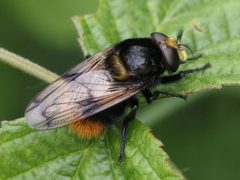
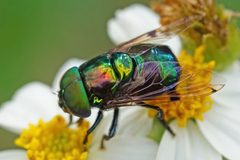
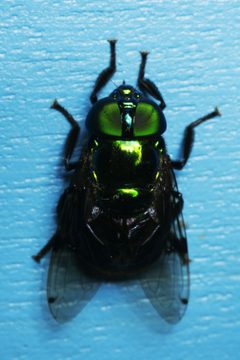
Volucellini can be distinguished from other hoverfly tribes by a combination of robust body form, often with metallic or dark coloration, and wing venation patterns. The Volucella is characterized by its -mimicking appearance with dense pile. Copestylum , such as the Mexican cactus fly (C. mexicanum), are notably large for syrphids, reaching approximately 19 mm in length. Graptomyza species are primarily Afrotropical forest inhabitants with distinctive morphological adaptations. Ornidia is distinguished by its small size and metallic coloration. Accurate identification to genus requires examination of wing venation, facial structure, and male genitalia.
Images
Habitat
varies by . Graptomyza are predominantly forest inhabitants in the Afrotropical region. Copestylum species are associated with arid and semi-arid environments where cacti and other succulents occur. Larval habitat specifically involves rotting plant material; Copestylum larvae develop in rotting cactus tissue, and have been observed in dying but not healthy cacti. The tribe shows ecological partitioning across vegetation types from tropical forest to desert scrub.
Distribution
The tribe has a global distribution with strong regional representation: Copestylum (over 350 ) is primarily Neotropical with some Nearctic extension; Graptomyza is Afrotropical with 17 described species including Gabon and South Africa; Ornidia has a broader distribution; Volucella is primarily Palearctic and Oriental. The Afrotropical Graptomyza distribution correlates with vegetation type, precipitation, and effective temperature gradients.
Diet
feed on nectar from flowers. Larval diet consists of rotting plant material; Copestylum larvae specifically consume rotting cactus tissue. The precise larval diet of other is not well documented.
Life Cycle
Larvae develop in rotting plant material. Copestylum mexicanum lays in rotting cacti. Complete occurs with egg, larval, pupal, and stages. Detailed information for most is lacking.
Behavior
are hoverers that visit flowers for nectar. They exhibit characteristic syrphid including sustained hovering. Larval behavior involves burrowing into rotting plant substrate.
Ecological Role
function as when visiting flowers. Larvae contribute to decomposition of rotting plant material, particularly cacti. The role in nutrient cycling in arid may be significant but is understudied.
Human Relevance
Mexican cactus fly (Copestylum mexicanum) is known to gardeners and entomologists in North America. Concern has been expressed about potential damage to cactus collections, though larvae appear restricted to already-dying plant material. The tribe is of interest to conservation biologists; Graptomyza have been assessed for protected area coverage with identified gaps in conservation strategy.
Similar Taxa
- MerodontiniAlso in Eristalinae with similar robust body forms; distinguished by larval (Merodontini in bulbs and roots vs. Volucellini in rotting cactus and plant material) and details of wing venation.
- EristaliniShares Eristalinae and includes rat-tailed maggot larvae in aquatic environments; distinguished by larval and including facial features.
- Carpenter bees (Xylocopinae)Volucella and some Copestylum are visual mimics; distinguished by single pair of wings, hovering , and absence of pollen-carrying structures in flies.
More Details
Taxonomic History
Copestylum mexicanum was formerly classified in Volucella but has been transferred to Copestylum based on morphological and phylogenetic evidence. The tribe contains over 350 in Copestylum alone, indicating substantial undescribed diversity.
Conservation Status
Afrotropical Graptomyza have been specifically assessed for conservation, with Naudesnek Summit in South Africa's Eastern Cape proposed as an important conservation area. Few protected areas currently cover the known distribution of this .
Research Gaps
As noted by , 'there is actually not much known about their ' for many . Larval biology, precise associations, and ecological requirements remain poorly documented for most Volucellini outside of Copestylum.