
Tropidiina
Genus Guides
2Tropidiina is a subtribe of hoverflies ( Syrphidae) containing 11 . Recent phylogenetic studies indicate it is sister to the tribe Eristalini, revealing that Milesiini as currently defined is polyphyletic. Members are characterized by a thickened hind and a body that narrows progressively from rear to . The subtribe has broad geographic distribution with highest diversity in the Americas and Europe.
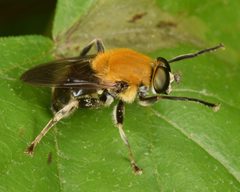
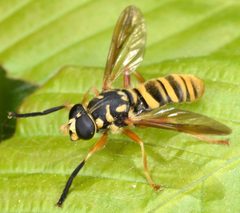
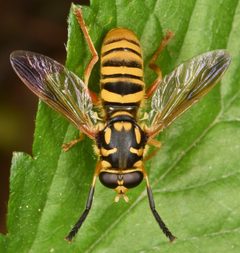
Pronunciation
How to pronounce Tropidiina: //ˌtroʊpɪˈdiːɪnə//
These audio files are automatically generated. While they are not always 100% accurate, they are a good starting point.
Identification
Images
Appearance
Body shape narrows progressively from rear to . Hind is distinctly thickened.
Distribution
Primarily distributed in the Americas and Europe. Some such as Meropidia are restricted exclusively to the Andes mountain range. Additional sightings have been recorded in Asia, Africa, and Oceania.
Seasonality
are mainly active during summer months, with peak activity in July.
Diet
Larvae are saprophagous and aphidophagous. are known to pollinate a wide range of flowers.
Behavior
pollination activity has been documented across diverse flower . Larval aphidophagy contributes to pest control.
Ecological Role
function as . Larvae contribute to decomposition through saprophagy and to through on aphids.
Human Relevance
Larvae provide pest control services through . support pollination of flowering plants.
Similar Taxa
- MilesiinaShares tribe Milesiini but lacks the thickened hind and progressively narrowing body shape characteristic of Tropidiina.
- XylotinaAnother subtribe of Milesiini; distinguished from Tropidiina by body proportions and leg structure.
- EristaliniRecent phylogenetic studies identify Eristalini as sister group to Tropidiina, though traditionally classified in separate tribes.
More Details
Phylogenetic position
Recent phylogenetic studies have found Tropidiina to be sister to tribe Eristalini, indicating that Milesiini in its current circumscription is polyphyletic as it does not include all descendants of the last common ancestor.
Observation trends
iNaturalist records show a doubling of Tropidiina observations between 2020 and 2025, though this likely reflects increased survey effort and platform usage rather than increase.