
Anasimyia
Schiner, 1864
swamp flies
Species Guides
5- Anasimyia bilinearis(Two-lined Swamp Fly)
- Anasimyia chrysostoma(Lump-legged Swamp Fly)
- Anasimyia distincta(short-spurred swamp fly)
- Anasimyia grisescens(Long-spurred Swamp Fly)
- Anasimyia perfidiosus(Treacherous Swamp Fly)
Anasimyia is a of wetland hoverflies (Syrphidae) characterized by aquatic larval development. The genus was historically treated as a subgenus of Lejops but has been elevated to full generic status based on morphological and molecular evidence. are associated with marshy and aquatic . The genus includes approximately 20 described distributed primarily across the Holarctic region.
Pronunciation
How to pronounce Anasimyia: //ˌæn.əˈsɪ.mi.ə//
These audio files are automatically generated. While they are not always 100% accurate, they are a good starting point.
Identification
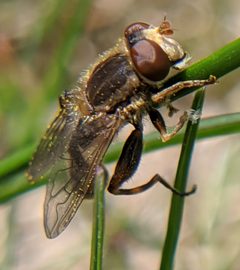
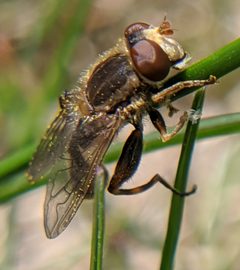
Anasimyia can be distinguished from the similar Lejops by subtle morphological differences in genitalia and facial structure; definitive identification often requires examination of male terminalia. within the genus are generally small to medium-sized hoverflies with somewhat elongated bodies. Some species have distinctive leg markings or abdominal patterns referenced in their (e.g., 'lump-legged,' 'long-spurred').
Images
Habitat
Strictly associated with wetland environments including marshes, fens, bogs, and shallow aquatic margins. Larvae develop in aquatic or semi-aquatic conditions.
Distribution
Holarctic distribution with records from Europe (Denmark, Norway, Sweden), Asia (Japan, Russia), and North America (Vermont, United States).
Life Cycle
Aquatic larvae; complete with , larval, pupal, and stages. Larval stage is spent in water or saturated substrates.
Ecological Role
are likely of wetland vegetation. Aquatic larvae contribute to detritus processing in wetland .
Similar Taxa
- LejopsFormerly treated as congeneric; distinguished by genital and facial characters. Both share wetland preference and aquatic larvae.