
Anasimyia bilinearis
(Williston, 1887)
Two-lined Swamp Fly
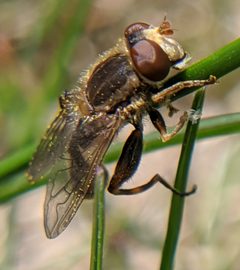
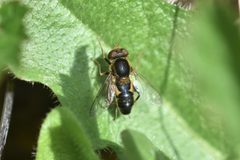
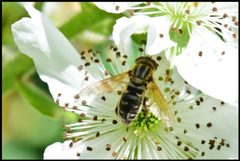
Anasimyia bilinearis, commonly known as the Two-lined Swamp Fly, is an uncommon North American syrphid fly. The is part of a whose larvae are aquatic and possess the characteristic 'rat-tailed' breathing siphon. visit flowers for nectar and pollen. The species is considered uncommon across its range.
Pronunciation
How to pronounce Anasimyia bilinearis: /ˌænəˈsɪmiə bɪlaɪˈnɛərɪs/
These audio files are automatically generated. While they are not always 100% accurate, they are a good starting point.
Identification
The specific epithet 'bilinearis' suggests two longitudinal lines as a distinguishing feature, though detailed diagnostic characters are not well documented in available sources. As a member of the Anasimyia, it shares the general hoverfly body plan with possible abdominal striping patterns. Precise identification likely requires examination of wing venation and male genitalia.
Images
Habitat
Associated with aquatic environments due to larval requirements; found in areas near larval . Specific microhabitat preferences for this are not well documented.
Distribution
Recorded throughout North America. Specific distribution records include the United States, with Vermont explicitly documented. The is described as uncommon across its range.
Diet
feed on nectar and pollen from flowers. Larval diet is not documented for this specifically, though related species in the are known to feed on decaying organic matter in aquatic environments.
Life Cycle
Larvae are aquatic and of the 'rat-tailed' type, possessing a long breathing siphon that extends to the water surface. Specific details of and timing are not documented.
Behavior
are capable of hovering , a trait common to Syrphidae. They are flower visitors. Other specific for this are not documented.
Ecological Role
may contribute to pollination through flower visitation. Larvae likely contribute to nutrient cycling in aquatic environments through feeding on decaying organic matter, though this is inferred from -level characteristics.
Human Relevance
No documented direct economic or medical significance. Like many hoverflies, are harmless and do not bite or sting.
Similar Taxa
- Other Anasimyia speciesShare aquatic rat-tailed larvae and general hoverfly ; require careful examination of abdominal pattern and genitalia for separation
- Helophilus speciesFormerly classified in this ; share similar preferences and general appearance
- Other Eristalini hoverfliesSimilar flower-visiting and hovering capability; many have yellow-and-black abdominal patterns
More Details
Nomenclature
Originally described as Helophilus bilinearis by Williston in 1887 before transfer to Anasimyia. The basionym reflects historical taxonomic placement within a broader that has since been split.
Larval morphology
The 'rat-tailed' larval type refers to an extendable breathing siphon that allows larvae to inhabit shallow aquatic with low oxygen while maintaining contact with the atmosphere. This is a characteristic of the tribe Eristalini.