
Psychodinae
Moth Flies, Drain Flies, Filter Flies, Sewer Flies
Genus Guides
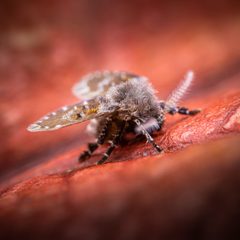
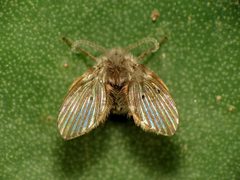
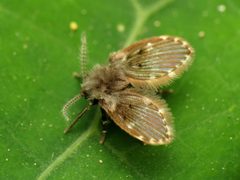
8Psychodinae is the nominate of moth flies (Psychodidae), commonly known as drain flies or filter flies. are small, hairy flies rarely exceeding 5–6 mm in length, with distinctive kidney-shaped connected by an eye-bridge. The subfamily has a distribution, including subantarctic islands. Larvae are aquatic or semi-terrestrial, developing in diverse moist ranging from natural springs and phytotelmata to artificial environments like drains and sewage systems.
Pronunciation
How to pronounce Psychodinae: //saɪˈkɒdənaɪ//
These audio files are automatically generated. While they are not always 100% accurate, they are a good starting point.
Identification
-level identification often requires examination of male genitalia shape due to overall morphological similarity among species. Larvae can be distinguished from other Psychodidae by the tubular siphon at the tip. differ from sand flies (Phlebotominae) by non-biting mouthparts and preferences; from other small nematoceran flies by the dense hair covering and wing venation pattern.
Images
Habitat
Larvae occur in marginal freshwater including spring and stream edges, waterlogged soils, phytotelmata (water-holding plants such as bromeliads and Tillandsia), leaf litter, compost, decaying wood, fungal fruiting bodies, , carrion, caves, drains, and sewage pipes. Some specialize in phytotelmata in Neotropical cloud forests. frequent damp environments and are attracted to artificial light; commonly encountered in bathrooms and sewage installations.
Distribution
distribution spanning all continents including subantarctic islands. Documented from Palearctic, Nearctic, Afrotropical, Neotropical, Oriental, and Australasian regions. Specific regional records include Europe, North Africa, North America, Central America (Honduras, Rica), Caribbean (Jamaica, Cuba, Puerto Rico), South America (Brazil), and Asia (China, Philippines, Borneo, Papua New Guinea).
Seasonality
active primarily in evening hours, with activity peaks varying by latitude. Attracted to lights after dark year-round in tropical and subtropical regions; temperate show seasonal increases in warmer months.
Diet
Larvae are primarily , feeding on , fungi, microbes, and organic matter in gelatinous films. feed on polluted water, nectar, and plant sap; some adults may not feed at all.
Life Cycle
Females deposit 30–200 in loose clusters on wet, decaying organic matter. Eggs hatch in 32–48 hours. Larval development spans 9–15 days. occurs on the surface of the larval substrate. from pupa takes 20–40 hours. time can be as short as 2–3 weeks under favorable conditions.
Behavior
are weak fliers with a characteristic hopping pattern. Males locate females using -specific and produce additional courtship pheromones. Visual and tactile displays supplement chemical communication. Many species possess specialized secondary sexual characteristics for pheromone release and detection. Adults drawn to artificial light sources, facilitating entry into buildings.
Ecological Role
Larvae function as in aquatic and semi-terrestrial , contributing to decomposition in phytotelmata and marginal freshwater . Considered beneficial organisms in municipal sewage treatment, where they help process organic waste. Some serve as indicators of old-growth forest conditions due to dependence on decaying wood.
Human Relevance
Common household nuisance when develop in sink drains, showers, and sewage systems. Not harmful to public health—do not bite or (unlike sand flies, Phlebotominae). Occasionally cause pseudomyiasis through accidental larval presence in human intestines or urinary tract. Larvae useful in biological sewage treatment. Some may be transported internationally via commercial plant trade (e.g., bromeliads).
Similar Taxa
- Phlebotominae (sand flies)Also in Psychodidae but distinguished by biting mouthparts, blood-feeding females, and role as (). Sand flies lack the dense hair covering and have different preferences.
- SycoracinaePsychodidae with reduced wing venation and different larval preferences; lacks the tubular larval siphon characteristic of Psychodinae.
- TrichomyiinaePsychodidae associated with decaying wood; larvae lack the terminal siphon structure and have different setal arrangements.
Misconceptions
Name 'drain fly' implies causation of clogged drains; actually, larvae feed on existing organic buildup and may help prevent clogs. Not all moth flies indicate unsanitary conditions—many are restricted to pristine natural such as caves and forest streams. do not bite; confusion with biting sand flies leads to unwarranted concern.
More Details
Phytotelmata specialists
Multiple Neotropical have evolved to exploit water-holding bromeliads and other phytotelmata, with some species transported internationally via the horticultural trade. The Moruseodina was described specifically from Honduran cloud forest bromeliads.
Fossil record
Cretaceous amber deposits (Lebanon, Lower Barremian) contain Psychodinae, demonstrating ancient diversification. Paleopsychoda jarzembowskii shows in wing characters, indicating established reproductive by the Early Cretaceous.
Taxonomic challenges
identification relies heavily on male genitalia due to conserved external features. Larval setal patterns and siphon structure provide additional diagnostic characters. Numerous nomenclatural revisions have occurred, particularly in Afrotropical and Palearctic faunas.
Sources and further reading
- BugGuide
- Wikipedia
- iNaturalist taxon
- NCBI Taxonomy
- Breakfast, Women in Entomology, and a Revolution
- Bug Eric: Moth Flies
- The West-Palearctic species of the genus Tonnoiriella Vaillant, 1971 (Diptera: Psychodidae, Psychodinae)
- Catalogue and bibliography of Afrotropical Psychodidae: Bruchomyiinae, Psychodinae, Sycoracinae and Trichomyiinae
- A new species of moth fly (Diptera, Psychodidae, Psychodinae) collected from Bromeliads in Florida
- A new genus of Psychodinae (Diptera, Psychodidae) from phytotelmata in a Honduran cloud forest
- Two new species of Psychodidae (subfamilies Trichomyiinae and Psychodinae) from Germany associated with decaying wood
- Abcharis nom. nov., a new substitute name for Notiocharis Eaton, 1913 (Diptera: Psychodidae: Psychodinae) with world check-list of species
- Paleopsychoda jarzembowskii, a new Lower Cretaceous species of moth flies from Lebanese amber (Diptera: Psychodidae: Psychodinae)
- Two new species of the genus Brunettia Annandale, 1910 (Diptera, Psychodidae, Psychodinae) from China.
- Intestinal and Urinary Pseudomyiasis by Psychodinae Larvae in an Adolescent: A Fact, Fallacy, or Harmless Spectator?