
Psychodini
Genus Guides
3- Feuerborniella
- Psychoda(moth fly)
- Threticus
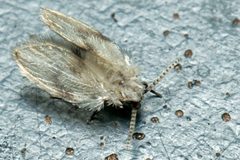
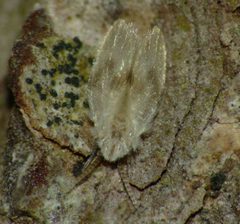
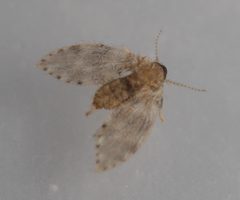
Psychodini is a tribe within the Psychodinae, the nominate subfamily of moth flies (Psychodidae). Members are small, -like flies with hairy wings and bodies. They are primarily associated with damp, humid environments including caves and wet organic substrates. The tribe is distributed globally, with larvae that are aquatic or semiterrestrial and that may feed on plant fluids or not feed at all.
Pronunciation
How to pronounce Psychodini: //ˌsaɪkoʊˈdaɪnaɪ//
These audio files are automatically generated. While they are not always 100% accurate, they are a good starting point.
Identification
Distinguished from other Psychodidae tribes by wing venation patterns and genitalic structures; specifically, wing with medial fork (M) originating beyond the and other venational characters. Separation from related tribes (especially Paramormiini and some Sycoracinae) requires examination of wing venation details and male terminalia. distinguished from other small -like flies by the combination of hairy wings, long , and characteristic resting posture.
Images
Appearance
Small flies with densely hairy wings held roof-like over the body at rest, giving a -like appearance. Wings often have reduced venation with characteristic venation patterns. Body covered in setae. long and bead-like () with 12-14 segments. typically 2-5 mm in length. Coloration generally dull gray, brown, or yellowish.
Habitat
Damp, humid microhabitats including wet rock surfaces in caves, stream margins, seepage areas, and moist organic matter. Larval include aquatic or semiterrestrial situations: thin water films on rocks, moss, decaying vegetation, and organic sludge. Some occur in specialized cave environments (troglobitic or troglophilic).
Distribution
distribution; recorded from nearly all countries and continents including subantarctic islands. Present in both temperate and tropical regions, with diversity concentrated in tropical and subtropical zones.
Seasonality
activity patterns vary by and climate; generally active during warmer months in temperate regions, with year-round activity in tropical areas. Some cave-dwelling species may show reduced seasonality.
Diet
: some feed on plant sap and nectar; others are non-feeding with reduced mouthparts. Larvae: filter-feeders or grazers on organic detritus, , and microorganisms in aquatic or semiaquatic .
Life Cycle
Holometabolous. laid in or near moist substrate. Larvae aquatic or semiterrestrial, passing through four instars. occurs in the larval , often within a silken cocoon or case. emerge to mate; lifespan typically short (days to weeks).
Behavior
weak fliers, often observed hopping or running rather than sustained . Strongly phototactic in some , attracted to light. Mating swarms have been observed in some species. Adults often rest on vegetation or substrates near larval .
Ecological Role
Larvae contribute to nutrient cycling in aquatic and semiaquatic through processing of organic detritus. Serve as food source for including aquatic , fish, and terrestrial . Some are indicators of clean, cool water conditions; others tolerate organic pollution.
Human Relevance
Some associated with human structures, particularly where moisture accumulates (drains, sewage systems, compost). Can be nuisance pests in buildings. Used as bioindicators for water quality assessment. Of limited medical importance; not significant .
Similar Taxa
- ParamormiiniAnother tribe in Psychodinae; distinguished by wing venation with medial fork originating before or at , and differences in male genitalia structure.
- Sycoracinae of Psychodidae; generally more slender with reduced wing hair and different wing venation patterns.
- Phlebotominae (sand flies) of Psychodidae; have wings held more spread at rest, different wing venation, and are blood-feeding; medically important.
More Details
Systematic note
Psychodini is the nominate tribe of Psychodinae. Generic classification within the tribe has been historically unstable, with many previously placed in the large Psychoda now distributed across multiple genera based on phylogenetic studies.