
Amauromyza
Hendel, 1931
Species Guides
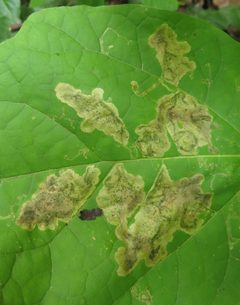
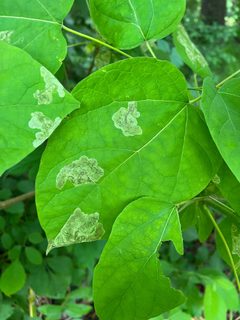
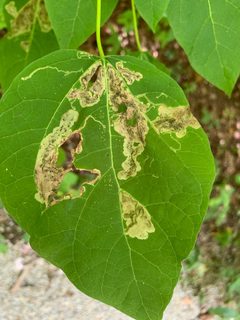
3Amauromyza is a of leaf-miner and stem-borer flies in the Agromyzidae, comprising over 60 described . Most species are phytophagous, with larvae feeding internally in plant tissues. The genus includes significant agricultural pests such as Amauromyza karli, which has recently emerged as a major constraint to quinoa production in the western United States. Species exhibit variation in feeding , with some mining leaves and others boring stems.
Pronunciation
How to pronounce Amauromyza: //ˌæməˈrɒmɪzə//
These audio files are automatically generated. While they are not always 100% accurate, they are a good starting point.
Identification
Members of this are small flies, typically 2-4 mm in length. Amauromyza karli has a dark brown body, bright yellow , and bright yellow ; leg joints are also yellow. Larvae are cream-white, legless, and lack a defined head capsule. Accurate identification to level generally requires examination of male genitalia and consultation of specialized taxonomic keys for Agromyzidae.
Images
Habitat
Terrestrial associated with herbaceous vegetation. Agricultural fields, including quinoa crops in Colorado, and natural vegetation. Stem-boring occupy the pith of plant stems; leaf-mining species occur within leaf mesophyll.
Distribution
Holarctic distribution with records from North America (including Colorado, Florida, Vermont, and Canada), Europe (Scandinavia, Balkans, British Isles), and Asia (Japan, China). Specific distribution varies by .
Diet
Larvae feed on plant pith (stem-boring ) or leaf mesophyll (leaf-mining species). Amauromyza karli feeds specifically on quinoa (Chenopodium quinoa) pith. Amauromyza flavifrons is a leafminer with documented associations including Chenopodiaceae.
Host Associations
- Chenopodium quinoa - primary quinoa; major for A. karli
- Chenopodium album - probable common lambsquarters; suspected alternative for A. karli
- Beta vulgaris - sugar beet; documented for A. flavifrons
Life Cycle
Complete . are deposited on or near plants. Larvae develop internally in plant tissues (stems or leaves). For stem-boring such as A. karli, mature larvae likely exit stems through chewed holes and pupate in soil, though this has not been confirmed. emerge from pupae. Number of per year is unknown for most species.
Behavior
females oviposit on plants. Some exhibit host avoidance ; A. flavifrons populations near sugar beet farms discriminate against Beta vulgaris, whereas populations from sugar beet-free areas accept this host. Larval feeding destroys plant pith or leaf tissue.
Ecological Role
Primary consumers as phytophagous larvae. Some are significant agricultural pests causing yield reduction or plant death. Interactions with fungal have been documented; A. karli abundance correlates with soil fungal diversity and composition, with potential for microbiome-mediated pest suppression.
Human Relevance
A. karli has caused severe economic losses in Colorado quinoa production, with 100% of acreage affected in 2022, leading to dramatic reduction in cultivated area. The ' stem-boring habit makes it difficult to control with surface-applied . Research is underway on endophytic fungi and plant resistance as management strategies.
Similar Taxa
- LiriomyzaAlso in Agromyzidae with leaf-mining larvae; distinguished by morphological details of male genitalia and larval cephalopharyngeal skeleton structure
- PhytomyzaAnother agromyzid leaf-mining ; Amauromyza historically treated as subgenus Phytobia within Amauromyza, now generally recognized as distinct
More Details
Taxonomic History
Originally described by Hendel in 1931. Some were historically classified under the subgenus Phytobia. The now includes over 60 described species with diverse associations primarily in Chenopodiaceae and related .
Research Priorities
For A. karli, critical knowledge gaps include: number of per year in the U.S., complete list of non-crop , confirmation of site, and development of effective management tactics. screening and endophytic are active research areas.
Sources and further reading
- BugGuide
- Wikipedia
- GBIF taxonomy match
- iNaturalist taxon
- NCBI Taxonomy
- Catalogue of Life
- Amauromyza karli adult - Entomology Today
- Amauromyza karli larva - Entomology Today
- Amauromyza karli pupa - Entomology Today
- U.S. Quinoa Crops Threatened by Little-Known Fly Pest
- quinoa-stem-damage - Entomology Today
- Endophytic 'Bodyguards': How Insect-Killing Fungi Inside Plants Can Help Manage Pests
- Characterizing fungal community shifts associated with Amauromyza karli Hendel (Diptera: Agromyzidae) infestation in quinoa
- Evolution of host avoidance in a leafmining fly, Amauromyza flavifrons
- Some New Host Plant Records and Parasites of Phytobia (Amauromyza) Maculosa in Florida (Diptera: Agromyzidae)
- Genetic Variation and the Potential for Host Range Evolution in the Leafmining Fly Amauromyza flavifrons (Diptera: Agromyzidae)