
Trichoclinocera
Collin, 1941
Species Guides
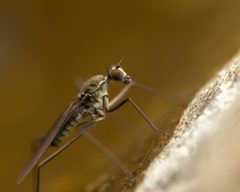
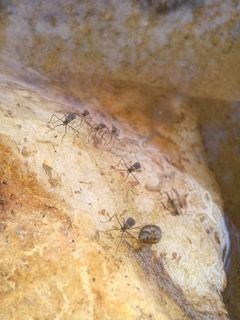
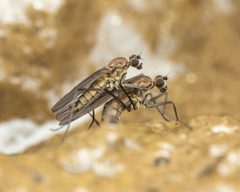
1Trichoclinocera is a of aquatic dance flies in the Empididae, Clinocerinae. The genus contains approximately 30 described distributed across the Holarctic and eastern Asia, with 16 species recognized from the Nearctic region and nine from Japan. Species are organized into six species-groups based on morphological characteristics, primarily of the male terminalia. The genus was established by Collin in 1941 and has undergone significant taxonomic revision, with Seguyella and Acanthoclinocera recently synonymized under Trichoclinocera.
Pronunciation
How to pronounce Trichoclinocera: /ˌtrɪkoʊˌklaɪnəˈsɛrə/
These audio files are automatically generated. While they are not always 100% accurate, they are a good starting point.
Identification
Identification relies heavily on male terminalia structure; the is characterized within Clinocerinae by specific of male genitalia. -level identification requires examination of: shape (some species-groups show distinctive projections), leg chaetotaxy including femoral and tibial setae patterns, wing venation, and detailed structure of male terminalia including and surstyli. The T. systenognatha subgroup is distinguished by a long triangular projection from the ventral margin of the labellum. Females are generally more difficult to identify and may require association with males.
Images
Habitat
Aquatic and semi-aquatic environments; specifically associated with running water . Larvae have been collected from riffles in streams and rivers. In Missouri, specimens were collected from riffles in the East Fork of the Black River, with substrate characteristics noted. The Clinocerinae is generally associated with lotic (flowing water) habitats where larvae develop in aquatic or semi-aquatic conditions.
Distribution
Holarctic distribution with extensions into eastern Asia. Nearctic region: 16 including Pacific Northwest (Oregon), Rocky Mountains (Wyoming), Appalachian and Ozark regions (Tennessee, Arkansas, Pennsylvania, Missouri), eastern Canada (Ontario, Quebec), and northern regions. Palearctic: Europe including Fennoscandia (T. lapponica), with records from Japan (9 species), and eastern Asia including Bhutan, China, Nepal, and Vietnam (T. systenognatha subgroup).
Life Cycle
First descriptions of stages provided in Nearctic revision; larvae are aquatic and collected from stream substrates. Complete details remain incompletely documented for most .
Ecological Role
Aquatic macroinvertebrate component of stream and river ; larvae function as part of benthic in riffle . males form mating swarms, typical of Empididae.
Human Relevance
Used as bioindicators of aquatic quality in stream biomonitoring programs. The Missouri record specifically documents use in regional aquatic macroinvertebrate surveys.
Similar Taxa
- ClinoceraBoth in Clinocerinae; distinguished by male terminalia and leg chaetotaxy patterns. Trichoclinocera has been justified as monophyletic based on derived character states not shared with Clinocera.
- WiedemanniaFormerly Acanthoclinocera glaucescens transferred to Wiedemannia; Trichoclinocera distinguished by male terminalia structure and lack of glaucescens-type wing pruinescence.
- Rhyacophila (Trichoptera)Larvae both aquatic and found in similar riffle ; distinguished by presence of and case-building in caddisflies versus dipteran larval with respiratory siphon.
More Details
Taxonomic History
Seguyella Vaillant and Acanthoclinocera Saigusa have been newly synonymized with Trichoclinocera based on phylogenetic analysis. All formerly in these transferred to Trichoclinocera except Acanthoclinocera glaucescens, now Wiedemannia glaucescens.
Species-Group Classification
Six -groups recognized: T. comata group, T. dolicheretma group, T. lapponica group, T. longipes group, T. systenognatha subgroup, plus four unplaced species (T. cummingi, T. fluviatilis, T. fuscipennis, T. maewa).
Type Localities
Notable type localities include: Starvation Creek, Oregon (T. cascadensis); Newton Creek, Wyoming (T. rupestris); Fall Creek Falls, Tennessee (T. agilis); Ottawa, Ontario (T. dasycoxa); Gatineau Park, Quebec (T. falcata); Haw Creek Falls, Arkansas (T. ozarkensis); Phoenixville, Pennsylvania (T. pectinifemur); Robber's Cave, Oklahoma (T. cummingi).
Sources and further reading
- BugGuide
- GBIF taxonomy match
- iNaturalist taxon
- NCBI Taxonomy
- Catalogue of Life
- Revision of the Japanese species of Trichoclinocera Collin (Diptera: Empididae: Clinocerinae)
- Revision of the Trichoclinocera systenognatha species subgroup from eastern Asia (Diptera, Empididae, Clinocerinae)
- Trichoclinocera (Diptera: Empididae): a new aquatic dance fly record for Missouri
- REVISION OF THE NEARCTIC SPECIES OFTRICHOCLINOCERACOLLIN (DIPTERA: EMPIDIDAE; CLINOCERINAE)