
Clinocerinae
aquatic dance flies
Genus Guides
4- Clinocera
- Dolichocephala(dagger flies)
- Roederiodes
- Trichoclinocera
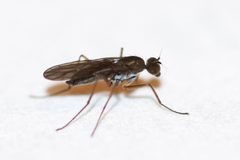
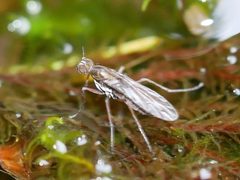
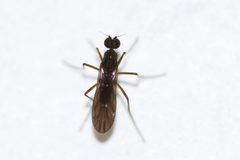
Clinocerinae is a of dance flies (Empididae) comprising 16 recognized including Clinocera, Wiedemannia, Dolichocephala, Trichoclinocera, and Kowarzia. Members are commonly known as aquatic dance flies due to their strong association with freshwater . The subfamily has a global distribution with particularly diverse faunas in the Palaearctic and Oriental regions. Multiple generic revisions and -level revisions have been published for Nearctic, Palaearctic, and Oriental faunas.
Pronunciation
How to pronounce Clinocerinae: //ˌklaɪnoʊsəˈraɪni//
These audio files are automatically generated. While they are not always 100% accurate, they are a good starting point.
Identification
Clinocerinae can be distinguished from other Empididae by a combination of characters including wing venation patterns and male terminalia structure; a key to is available for identification of adult specimens. The subfamily is distinguished from the related Trichopezinae (formerly included within Clinocerinae) by phylogenetic relationships and morphological . Generic-level identification relies on characters of the male and female terminalia, wing shape, and body proportions.
Images
Habitat
Freshwater aquatic and semi-aquatic environments including streams, rivers, and springs. Specific associations vary by : Clinocera occur in tropical and montane forests including seasonally dry lowland forests and aseasonal moist mountain forests; Wiedemannia species are associated with running waters; Dolichocephala and Trichoclinocera species occupy lotic habitats. The is predominantly lotic with strong fidelity to clean, flowing water systems.
Distribution
Global distribution encompassing all biogeographic regions. Documented from: Nearctic (North America, Mexico), Neotropical ( Rica, Colombia), Palaearctic (Europe including Croatia, Czech Republic, Portugal, Sweden, Greece; Asia including Japan, Thailand, China, Vietnam, Bhutan, eastern Asia), Oriental (Thailand), Afrotropical (Tanzania, Malawi), and Balkan Peninsula. Wiedemannia is the most -rich in many European regions (20 species in Croatia).
Seasonality
Most are with emerging in spring and summer. Some species exhibit extended or atypical seasonal activity: Kowarzia barbatula and Wiedemannia zetterstedti are present throughout the year; Wiedemannia aequilobata occurs in winter. varies by geographic region and specific conditions.
Life Cycle
stages are aquatic. First descriptions of immature stages have been provided for some Trichoclinocera , indicating aquatic larval and pupal development in lotic . Detailed information remains limited for most .
Ecological Role
Component of aquatic insect in lotic . The Croatian fauna shows similarity to neighboring Slovenian assemblages, indicating regional ecological coherence. Some rare and their stream have been recommended for conservation protection.
Human Relevance
Recommended for conservation attention in some European regions due to rarity and association with high-quality stream . Used as indicators of clean, flowing water systems. Subject of extensive taxonomic research including studies (COI sequences obtained for multiple Nearctic of Roederiodes).
Similar Taxa
- TrichopezinaeFormerly included within Clinocerinae but now recognized as a separate based on phylogenetic analysis; distinguished by hypothesized sister group relationship to Brachystomatinae and Ceratomerinae rather than to other Clinocerinae
- HemerodromiinaeOften collected and studied together with Clinocerinae as 'aquatic dance flies' but distinguished by different morphological characters and ecological preferences; both share lotic associations
More Details
Taxonomic History
Major generic revision recognized 16 and proposed numerous new synonyms including: Hydrodromia = Clinocerinae; Archiclinocera and Hypoclinocera = Kowarzia; Lamposoma, Fur, and Obstinocephala = Dolichocephala. Several genera were transferred to the newly elevated Trichopezinae: Boreodromia, Ceratempis, Ephydrempis, Niphogenia, Sabroskyella, and Trichopeza.
Research Activity
Active taxonomic research continues with recent descriptions from Thailand (8 new Clinocera species, 7 new Dolichocephala species), Japan (7 new Trichoclinocera species), Colombia (2 new Asymphyloptera species), eastern Asia (3 new Trichoclinocera systenognatha subgroup species), Afrotropical region (2 new Wiedemannia species), and Nearctic region (multiple new Roederiodes and Dolichocephala species).
Phylogenetic Relationships
Cladistic relationships among Clinocerinae have been analyzed. The monophyly of Trichoclinocera has been justified with phylogenetic relationships among its six -groups discussed. The is hypothesized to exclude the Trichopezinae, which represents a separate lineage more closely related to Brachystomatinae and Ceratomerinae.
Sources and further reading
- BugGuide
- Wikipedia
- iNaturalist taxon
- NCBI Taxonomy
- Catalogue of Life
- Clinocera Meigen of Thailand (Diptera: Empididae: Clinocerinae)
- Dolichocephala Macquart of Thailand (Diptera: Empididae: Clinocerinae)
- Revision of New World species of Roederiodes Coquillett (Diptera: Empididae: Clinocerinae)
- New Afrotropical species of Wiedemannia Zetterstedt (Diptera, Empididae, Clinocerinae)
- Revision of the Japanese species of Trichoclinocera Collin (Diptera: Empididae: Clinocerinae)
- Revision of the Trichoclinocera systenognatha species subgroup from eastern Asia (Diptera, Empididae, Clinocerinae)
- Report on Brachystomatidae and Empididae (Hemerodromiinae, Clinocerinae) from continental Portugal and neighbouring countries
- Aquatic dance flies of Czech Republic (Empididae: Clinocerinae and Hemerodromiinae): new records and updated species list
- REVISION OF THE NEARCTIC SPECIES OFTRICHOCLINOCERACOLLIN (DIPTERA: EMPIDIDAE; CLINOCERINAE)
- Revision ofDolichocephalaof America, north of Mexico (Diptera: Empididae: Clinocerinae)
- Croatian aquatic dance flies (Diptera: Empididae: Clinocerinae and Hemerodromiinae): species diversity, distribution and relationship to surrounding countries
- <span lang="EN">A new species of Wiedemannia (Diptera: Empididae: Clinocerinae) from Balkan Peninsula</span>
- GENERIC REVISION OF THE CLINOCERINAE (EMPIDIDAE), AND DESCRIPTION AND PHYLOGENETIC RELATIONSHIPS OF THE TRICHOPEZINAE, NEW STATUS (DIPTERA: EMPIDOIDEA)
- Two new species of Asymphyloptera Collin (Diptera: Empididae: Clinocerinae) from Colombia, with an updated key to males of New World species
- Aquatic dance flies (Diptera, Empididae, Clinocerinae and Hemerodromiinae) of Greece: species richness, distribution and description of five new species