
Exechiini
Genus Guides
6- Allodia
- Brevicornu
- Cordyla
- Exechia(fungus gnats)
- Exechiopsis(fungus gnats)
- Rymosia
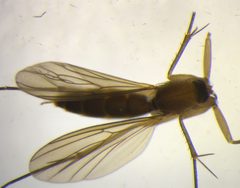
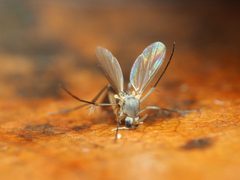
Exechiini is a tribe of fungus gnats within the Mycetophilidae, comprising approximately 13 and at least 130 described . Members are small, delicate flies associated with fungal . The tribe represents a moderately diverse lineage within the broader fungus gnat radiation, though many species remain poorly documented.
Pronunciation
How to pronounce Exechiini: /ɛkˈsiːkaɪˌeni/
These audio files are automatically generated. While they are not always 100% accurate, they are a good starting point.
Identification
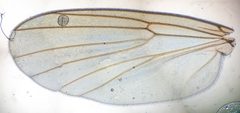
Exechiini can be distinguished from other Mycetophilidae tribes by combinations of wing venation patterns, antennal structure, and genitalic , though precise diagnostic features vary by . Identification to tribe level generally requires microscopic examination of specimens. Separation from the closely related tribe Exechiiniini (where recognized) or other Mycetophilinae tribes relies on subtle characters of the wing R-M crossvein position and male terminalia structure.
Images
Habitat
occur in moist, forested environments where fungal fruiting bodies are present. Larval development is tied to fungal substrates, including decaying mushrooms, bracket fungi, and other basidiomycete fruiting bodies. are typically found in shaded, humid microhabitats near larval development sites.
Distribution
Widespread across forested regions of the Northern Hemisphere, with records from North America, Europe, and Asia. Distribution patterns at the and level remain incompletely documented due to taxonomic challenges and limited collecting effort.
Seasonality
activity generally coincides with fungal fruiting periods, primarily spring through autumn in temperate regions. Peak abundance varies geographically and with local climatic conditions affecting fungal .
Life Cycle
Larvae develop within fungal fruiting bodies, feeding on fungal tissue. Complete occurs with typically within or adjacent to the larval substrate. are short-lived and do not feed extensively, functioning primarily in and .
Behavior
are weak fliers, typically remaining close to larval patches. Mating and oviposition are poorly documented but presumed to occur in proximity to suitable fungal substrates. Adults may form small near abundant fungal resources.
Ecological Role
Larvae function as fungal decomposers, contributing to nutrient cycling in forest . Their specialized association with fruiting bodies suggests potential role in fungal spore , though this has not been quantitatively demonstrated. The tribe represents a component of forest biodiversity indicative of intact fungal .
Human Relevance
No direct economic importance. Occasionally encountered by mushroom collectors and in forest biodiversity surveys. May serve as indicators of forest health due to dependence on fungal resources.
Similar Taxa
- ExechiiniiniHistorically confused or synonymized with Exechiini; distinguished by wing venation details and male genitalia structure, though classification remains unsettled in some treatments.
- MycetophiliniAnother tribe within Mycetophilinae; differs in antennal proportions, wing ratios, and larval substrate preferences (broader range of fungal in Mycetophilini).
More Details
Taxonomic Uncertainty
The tribal classification within Mycetophilinae, including the limits of Exechiini versus Exechiiniini, has been subject to revision. Some authorities recognize Exechiiniini as distinct, while others subsume it within Exechiini. This affects counts and generic assignments.
Undescribed Diversity
Given the specialized and limited collecting effort in many regions, substantial undescribed species diversity is anticipated within Exechiini. Molecular phylogenetic studies have begun to clarify relationships but remain incomplete.