
Allodia
Winnertz, 1863
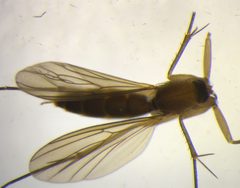
Allodia is a of fungus gnats in the Mycetophilidae, established by Winnertz in 1863. The genus has distribution but is predominantly Palearctic, with recent discoveries expanding its known range in the Afrotropical region. within Allodia are divided between two subgenera: Allodia stricto sensu and Brachycampta. Afrotropical species show recent diversification with a single origin, as supported by studies.
Pronunciation
How to pronounce Allodia: //əˈloʊdiə//
These audio files are automatically generated. While they are not always 100% accurate, they are a good starting point.
Identification
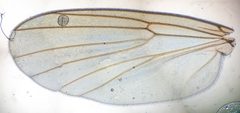
identification relies heavily on male terminalia characters and minor differences in wing venation; (CO1 region) provides additional support for species delimitation where morphological differences are subtle. The subgenera Allodia stricto sensu and Brachycampta can be distinguished by specific morphological traits, though some specimens (including fossil material) may show intermediate characteristics.
Images
Habitat
Mountainous forested environments in the Afrotropical region; early Miocene Ethiopian amber deposits indicate historical presence in forested environments with angiosperm resin production.
Distribution
distribution, though predominantly Palearctic. Documented from Denmark, Norway, and Sweden (GBIF records). Afrotropical records include mountainous areas in south and east Africa: Karkloof, Drakensberg, Nyeri, Mazumbai, and Keurbos regions. Fossil evidence from early Miocene Ethiopian amber (16–23 Myr ago) extends known temporal and geographic range.
Similar Taxa
- ExechiaBoth belong to tribe Exechiini and share similar wing venation patterns; distinguished by specific characters of the male terminalia and antennal structure
- MycetophilaSame Mycetophilidae but distinguished by differences in wing venation, particularly the configuration of the M-fork and r-m
Sources and further reading
- BugGuide
- Wikipedia
- GBIF taxonomy match
- iNaturalist taxon
- NCBI Taxonomy
- Catalogue of Life
- Six new species of Afrotropical Allodia (Diptera: Mycetophilidae): DNA barcodes indicate recent diversification with a single origin
- The genus <i>Allodia</i> (Diptera: Mycetophilidae) in Miocene Ethiopian amber