Poecilanthrax willistonii
(Coquillett, 1887)
Williston's bee fly
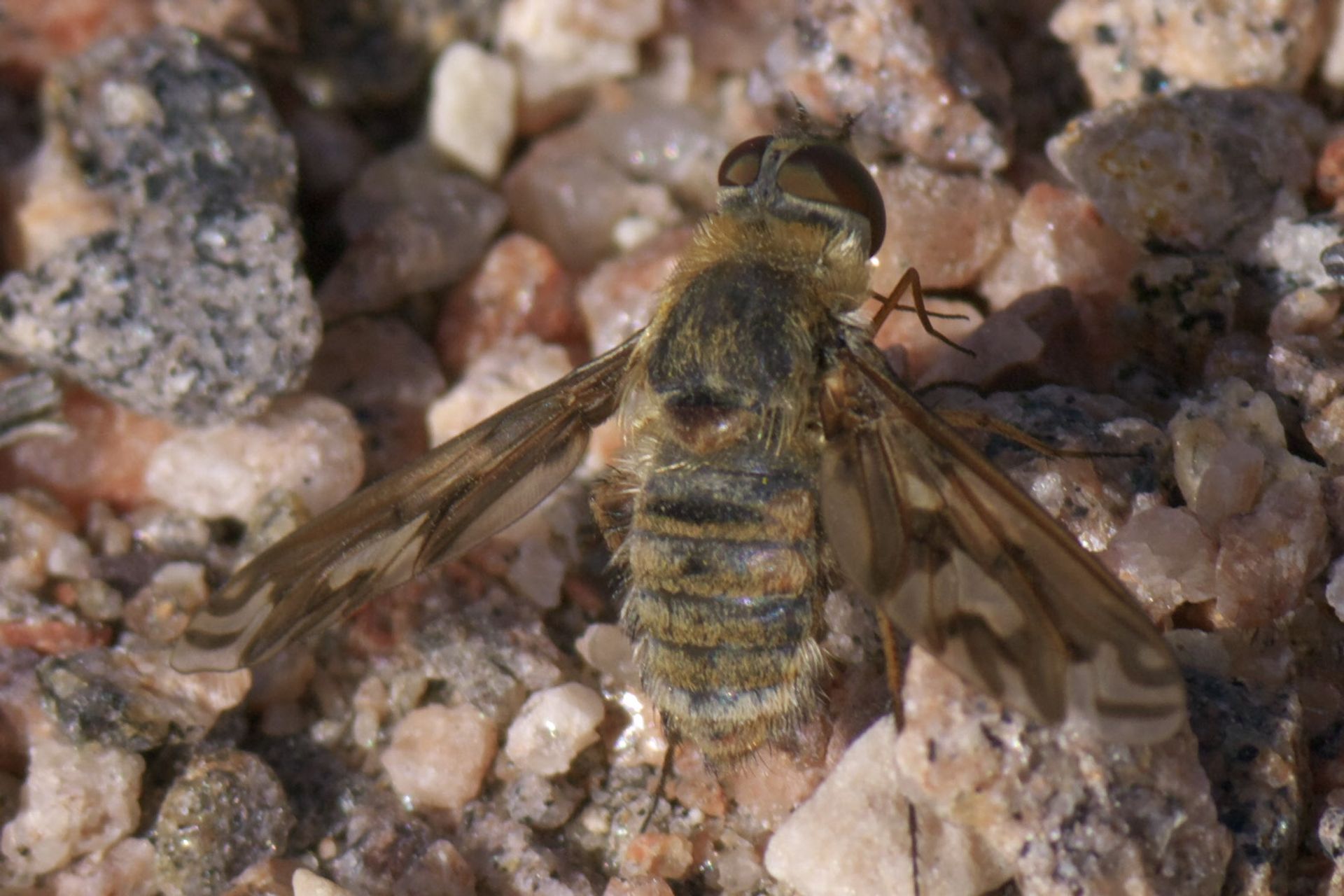
Poecilanthrax willistonii is a North American bee fly in the Bombyliidae. The Poecilanthrax is strictly North American in distribution, with the greatest abundance of and individuals found in the Great Basin region. Like other members of the genus, the larvae develop as inside caterpillars of cutworms and armyworms (family Noctuidae). are typically found in arid and semi-arid , often associated with flowering plants where they feed on nectar.

Pronunciation
How to pronounce Poecilanthrax willistonii: //ˌpiː.sɪˈlæn.θræks wɪˌlɪsˈtoʊ.ni.aɪ//
These audio files are automatically generated. While they are not always 100% accurate, they are a good starting point.
Images
Habitat
Arid and semi-arid regions, including sand scrub remnants, dry grasslands, and open woodlands. frequently visit flowers in these .
Distribution
North America, primarily in the western United States including the Great Basin region. Records extend from the Great Basin south through the southwestern United States.
Diet
feed on nectar from flowers. Larvae are that develop inside caterpillars of noctuid (cutworms and armyworms).
Host Associations
- Noctuidae - larval development inside caterpillars
Life Cycle
Complete with , larval, pupal, and stages. Larvae develop as internal of noctuid caterpillars. occurs in the soil.
Behavior
are and frequently observed hovering at or perching on flowers to feed on nectar. Like other bee flies, they are agile fliers.
Ecological Role
agent of noctuid caterpillars, including agricultural pests such as cutworms and armyworms.
Human Relevance
Potential biocontrol value for agricultural pest management, though specific economic impact data for this is limited.
Similar Taxa
- Poecilanthrax luciferSame , similar size and general appearance, but distinguished by abdominal pattern and wing venation coloration—P. lucifer has conspicuous black and yellow tomentose crossbands on the and yellow or tan bases on larger wing
- Other Poecilanthrax species members share similar body plan and lifestyle; -level identification requires examination of abdominal pattern, wing venation, and other subtle morphological features
More Details
Taxonomic note
The name Poecilanthrax derives from Greek roots referring to variable or spotted charcoal/black coloration, not from the anthrax. The specific epithet willistonii honors the American entomologist Samuel Wendell Williston (1851-1918), known for his work on Diptera and as a pioneer in entomological education.
Research needs
Detailed studies, range specificity, and precise distribution records for P. willistonii remain limited in published literature. Most biological information is inferred from better-studied such as P. lucifer.