
Villini
Hull, 1973
banded bee flies
Genus Guides
15Villini is a tribe of bee flies within the Anthracinae, Bombyliidae, established by Hull in 1973. The tribe comprises approximately 14 and at least 100 described . Members are commonly referred to as "banded bee flies" in reference to their distinctive wing patterns. As with other bee flies, are while larvae are , though specific details for many Villini species remain poorly documented.
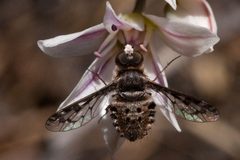
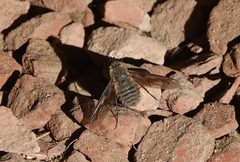
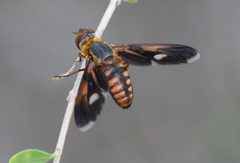
Pronunciation
How to pronounce Villini: /ˈvɪlɪnaɪ/
These audio files are automatically generated. While they are not always 100% accurate, they are a good starting point.
Identification
Separation from other Bombyliidae tribes relies on wing venation patterns, particularly the arrangement of in the wing margin, and details of capsule structure including antennal . Within Anthracinae, Villini can be distinguished from the related tribe Anthracini by specific characters of the wing base and leg structure. Generic-level identification requires examination of male genitalia and detailed wing venation.
Images
Appearance
Distribution
occur across multiple continents including North America, South America, Europe, Asia, and Africa. Specific range boundaries for individual and species vary considerably and are incompletely documented.
Similar Taxa
- AnthraciniAlso placed in Anthracinae; distinguished by differences in wing venation, particularly the structure of the anal lobe and basal wing , as well as leg segment proportions.
- Other Bombyliidae tribesVillini is distinguished from tribes in other (e.g., Bombyliinae, Exoprosopinae) by the combination of subfamily-level characters of Anthracinae including specific antennal and wing base .
More Details
Taxonomic History
The tribe was established by Hull in 1973 as part of his revisionary work on Bombyliidae. The classification of Anthracinae, including the placement and limits of Villini, has undergone refinement with subsequent morphological and molecular studies.
Research Needs
Despite the large number of observations (over 89,000 on iNaturalist), detailed biological information for most Villini is lacking. Larval , specific requirements, and seasonal activity patterns remain unknown for many .