
Hemipenthes
Loew, 1869
Species Guides
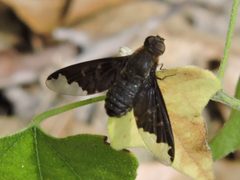
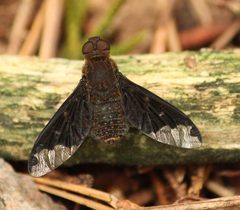
14Hemipenthes is a large of bee flies ( Bombyliidae) comprising numerous described distributed across the Holarctic and Palearctic regions. are small to large robust flies measuring 5–14 mm in body length. The genus is distinguished from similar bee fly genera by characteristic wing venation patterns. A significant taxonomic revision occurred in 2020, when several species were transferred to the new genus Ins.
Pronunciation
How to pronounce Hemipenthes: /ˌhɛmɪˈpɛnθiːz/
These audio files are automatically generated. While they are not always 100% accurate, they are a good starting point.
Identification
Distinguished from the similar Villa by wing venation patterns. -level identification requires examination of specific morphological characters detailed in taxonomic revisions. Body size ranges from small to large within the genus (5–14 mm), contributing to identification challenges.
Images
Appearance
Small to large robust flies with body length ranging 5–14 mm. Wing venation differs from similar such as Villa, serving as a primary diagnostic feature. General bee fly with compact, sturdy build typical of the Bombyliidae.
Distribution
Holarctic and Palearctic ecozones. North American distribution includes Mexico and the United States across multiple states. Palaearctic records from Europe, Central Asia, China, and Russia. Some extend into the Neotropical region (South America) and Oriental region (Taiwan, Nepal, India, Myanmar, Pakistan).
Diet
visit flowers for nectar using elongated . Specific dietary details for most remain undocumented.
Life Cycle
Larvae are hyperparasites, developing as of ichneumon larvae, tachinid fly larvae, and other insects that themselves attack caterpillars of butterflies and moths.
Behavior
exhibit flower-visiting . Specific behavioral observations for most are sparse in the literature.
Ecological Role
Larvae function as hyperparasitoids in , parasitizing primary of lepidopteran herbivores. This creates a tertiary interaction that may influence of both parasitoid and .
Human Relevance
are harmless to humans and pets; elongated mouthparts are adapted for nectar feeding, not biting. Larval hyperparasitism may have indirect effects on pest caterpillar through disruption of primary , though this has not been quantified for applications.
Similar Taxa
- VillaSimilar bee fly distinguished by wing venation patterns; Hemipenthes exhibits different venation that serves as the primary character separating these genera.
- Ins erected in 2020 to accommodate several formerly classified in Hemipenthes, reflecting ongoing taxonomic refinement in the tribe Villini.
More Details
Taxonomic History
The underwent significant revision in 2020 when multiple were transferred to the newly described genus Ins. A 2009 taxonomic review of North American species described two new species (H. albus and H. translucens) and established several synonymies, including the recognition that H. eumenes is a synonym of H. seminigra.
Fossil Record
Three extinct are known from European deposits: H. gabbroensis (Miocene, Italy), H. provincialis (Oligocene, France), and H. tertiaria (Oligocene, Germany).