
Villa
Lioy, 1864
bee flies
Species Guides
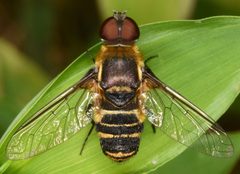
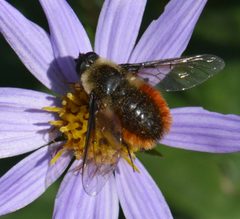
12Villa is a of bee flies ( Bombyliidae) comprising approximately 270 described distributed across all continents except Antarctica. range from 5 to 17 mm in length and are characterized by rounded and distinctive wing venation patterns that distinguish them from related genera such as Hemipenthes. Males of some species possess conspicuous silvery patagial . The genus belongs to the tribe Villini within the Anthracinae.
Pronunciation
How to pronounce Villa: //ˈvɪlə//
These audio files are automatically generated. While they are not always 100% accurate, they are a good starting point.
Identification
Distinguished from the similar Hemipenthes primarily by wing venation patterns, particularly in the arrangement of radial and medial . The rounded profile contrasts with more angular head shapes in some related bombyliid genera. Presence of silvery patagial in males of certain provides a useful diagnostic character for those .
Images
Habitat
Terrestrial across diverse biomes; specific microhabitat associations vary by . frequently observed in open, sunny areas where they hover and visit flowers. Larval habitats generally poorly documented but likely include soil or decaying organic matter given -level trends.
Distribution
distribution spanning all continents except Antarctica. Documented occurrence records include Europe (Denmark, Norway, Sweden), with present across North America, South America, Africa, Asia, and Australia.
Diet
feed on nectar from flowers. Larval diet varies by ; some are known or suspected of other insects, particularly stages of bees, , or beetles, consistent with -level patterns in Bombyliidae.
Life Cycle
Complete with , larva, pupa, and stages. Larvae of many are , though specific relationships are documented for relatively few species. typically occurs in soil or within host remains.
Behavior
are strong fliers capable of sustained hovering, a characteristic of Bombyliidae. They are frequent flower visitors and important in some . Males of some use silvery patagial in visual displays, possibly for mate attraction or territorial signaling.
Ecological Role
function as through nectar feeding at flowers. Larvae contribute to of insects as . The represents a component of bombyliid diversity in most terrestrial where they occur.
Human Relevance
Generally benign to human interests; no are known agricultural pests. Some species may be beneficial as agents through larval of pest insects. contribute to pollination services in natural and agricultural landscapes.
Similar Taxa
- HemipenthesSimilar body form and size range; distinguished by wing venation patterns and shape
More Details
Taxonomic history
Established by Lioy in 1864, the now contains approximately 270 described , making it one of the larger genera within Bombyliidae. The tribe Villini was erected to accommodate this and related genera within the Anthracinae.
Research needs
Larval and associations remain poorly documented for most . The wide geographic distribution suggests considerable undescribed diversity, particularly in tropical and southern hemisphere regions.
Sources and further reading
- BugGuide
- Wikipedia
- GBIF taxonomy match
- iNaturalist taxon
- NCBI Taxonomy
- Catalogue of Life
- Of Termites, Bed Bugs and Cockroaches | Bug Squad
- Water Warriors Bracing for Bruce Hammock Lab Water Balloon Battle | Bug Squad
- Bohart Museum Features UC Davis Forensic Entomologist Bob Kimsey | Bug Squad
- French mathematician and spider aficionado Cédric Villani honoured with a new orb-weaver | Blog
- How the Yellowhammer became a Kiwi – from hero to villain in 15 years | Blog
- It Takes a Village: Our Continued Efforts to Manage Invasive Species in the U.S.
- The Villa of Diomedes
- The Villa of Diomedes