
Nyctoporis
Eschscholtz, 1831
Species Guides
5Nyctoporis is a of darkling beetles in the Tenebrionidae, established by Eschscholtz in 1831. The genus comprises five described distributed in North America. These beetles belong to the Pimeliinae and tribe Nyctoporini. Members of this genus are part of the diverse tenebrionid fauna characteristic of arid and semi-arid regions of western North America.
Pronunciation
How to pronounce Nyctoporis: //nɪkˈtɒpɔːrɪs//
These audio files are automatically generated. While they are not always 100% accurate, they are a good starting point.
Identification
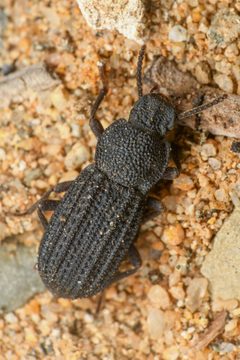
Nyctoporis can be distinguished from other Pimeliinae by their elongate body form and the presence of distinct pronotal carinae or crests, as reflected in species names such as N. carinata and N. cristata. The genus is characterized by darkling beetle features including hardened forewings () that completely cover the , thread-like , and a generally cylindrical body shape. Specific identification to species level requires examination of pronotal sculpturing, elytral striation patterns, and male genitalia.
Images
Habitat
Nyctoporis inhabit arid and semi-arid environments of western North America, including desert scrub, sagebrush steppe, and dry grasslands. These beetles are ground-dwelling and typically found in sandy or rocky substrates where they seek shelter under stones, debris, or within soil crevices during daylight hours.
Distribution
The is to North America, with records from the western United States and adjacent regions of Mexico. occur across diverse xeric from the Great Basin and Mojave Desert through the Sonoran Desert and into the Chihuahuan Desert regions.
Seasonality
Activity patterns vary by and locality, but are generally active during warmer months. activity predominates, with beetles emerging from daytime shelters after sunset to forage and seek mates.
Behavior
Nyctoporis are , spending daylight hours concealed under surface objects or buried in substrate. This represents an to reduce desiccation risk and avoid in exposed arid environments.
Ecological Role
As decomposers, these beetles contribute to nutrient cycling in arid by consuming dead plant material and other organic detritus. They form part of the , serving as prey for vertebrates and including rodents, reptiles, and predatory arthropods.
Human Relevance
Nyctoporis have no direct economic importance. They are occasionally encountered by entomologists and naturalists in western North American deserts. The is documented through citizen science platforms with over 1,300 observations, contributing to distributional knowledge.
Similar Taxa
- EleodesBoth are large, common darkling beetles in western North American deserts. Eleodes typically have a more rounded, convex body profile and often exhibit the defensive '-stand' posture; Nyctoporis species are more elongate with pronounced pronotal carinae and do not perform this .
- AsbolusAnother Pimeliinae with similar preferences. Asbolus often have a more compact, heavily sculptured body with distinctive coloration; Nyctoporis species lack the pronounced or tuberculate surface texture seen in many Asbolus.
More Details
Etymology
The name Nyctoporis derives from Greek roots: 'nykto-' meaning night, and '-poris' relating to passage or journey, alluding to the habits of these beetles.
Species diversity
The five described (N. aequicollis, N. carinata, N. cristata, N. sponsa, and N. vandykei) show variation in pronotal sculpturing and geographic distribution, though comprehensive modern revisionary work is lacking.