
Pseudozonitis
Dillon, 1952
Species Guides
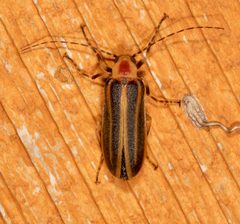
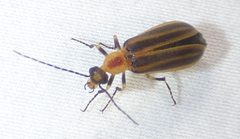
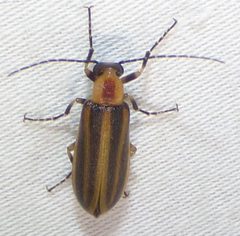
11Pseudozonitis is a of blister beetles ( Meloidae, Nemognathinae) established by Dillon in 1952. The genus contains approximately 17 described distributed primarily in North America. Like other nemognathine blister beetles, species in this genus are characterized by elongated, filamentous adapted for feeding on nectar from flowers with deep corollas. The genus is closely related to Nemognatha and Zonitis, forming part of a species group within the tribe Nemognathini.
Pronunciation
How to pronounce Pseudozonitis: /ˌsjuː.doʊˈzɒnɪtɪs/
These audio files are automatically generated. While they are not always 100% accurate, they are a good starting point.
Identification
Pseudozonitis can be distinguished from the closely related Nemognatha and Zonitis by specific morphological features of the mouthparts and body proportions. Members of this genus possess the characteristic elongated, bristle-covered typical of nemognathine blister beetles, which are used for nectar feeding via capillary action rather than suction. -level identification requires examination of details of antennal structure, pronotal shape, and elytral coloration and maculation patterns.
Images
Distribution
The Pseudozonitis is distributed in North America, with occurring in the southwestern United States and Mexico. Specific distribution records indicate presence in Arizona, Texas, New Mexico, and adjacent Mexican states.
Similar Taxa
- NemognathaShares the tribe Nemognathini and possesses similarly elongated for nectar feeding; distinguished by differences in antennal structure and body proportions
- ZonitisClosely related in the same tribe with similar overall and feeding ; separated by specific characters of the mouthparts and genitalia