
Nemognathini
Laporte, 1840
Genus Guides
7Nemognathini is a tribe of blister beetles (Meloidae) within the Nemognathinae. The tribe contains multiple distributed across the New and Old Worlds, including Nemognatha, Gnathium, Zonitis, Pseudozonitis, and Tricrania in North America, and additional genera such as Apalus, Sitaris, and Stenoria in the Palearctic and Afrotropical regions. Members exhibit the hypermetamorphic characteristic of meloid beetles, with triungulin larvae that are typically of bees or grasshoppers.
Pronunciation
How to pronounce Nemognathini: /nɛmoʊˈnæθɪnaɪ/
These audio files are automatically generated. While they are not always 100% accurate, they are a good starting point.
Identification
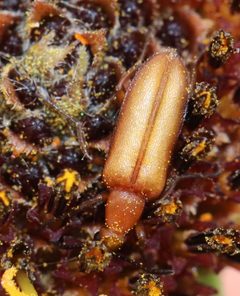
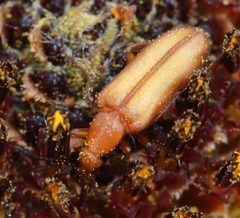
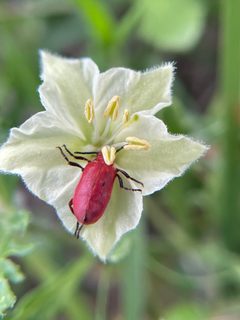
Nemognathini can be distinguished from the related Horiini within Nemognathinae by genitalic and antennal characters; generally lack the extreme antennal modifications seen in some Horiini. Members typically possess fully developed and lack the brachyelytrous (short-winged) condition found in some other meloid groups. The tribe includes both robust and slender forms, with variable coloration ranging from metallic blue-green to yellow, orange, or black with contrasting markings.
Images
Distribution
New World: North America (United States, Mexico), with records from the southwestern and central United States through Mexico. Old World: Palearctic region (Europe, North Africa, Middle East, Central Asia), Afrotropical region, and Oriental region. The tribe shows a disjunct distribution with substantial diversity in both hemispheres.
Life Cycle
Hypermetamorphic development with , triungulin (first instar larva), multiple feeding instars, coarctate (resting) instar, and stages. Triungulin larvae are active, -seeking first instars that attach to adult bees or other insects to gain access to host nests or egg pods.
Behavior
Triungulin larvae exhibit phoretic , actively seeking and attaching to insects. This facilitates transport to the host's nesting or oviposition site where subsequent larval instars develop as or kleptoparasites.
Ecological Role
Human Relevance
Some have been investigated for potential of grasshoppers. The triungulin larvae can be mistaken for when found on bees, causing concern among beekeepers, though they do not persist on bees.
Similar Taxa
- HoriiniAlso placed in Nemognathinae; distinguished by more extreme in and different male genitalic structure. Horiini includes the Horia, which has distinctive antennal .
- MeloiniTribe within Meloinae; are typically larger, more robust, and often flightless with shortened (brachyelytrous); larvae have different associations.
- EpicautiniTribe within Meloinae; are generally more robust with different body proportions and lack the triungulin larval stage with - .