
Pseudozonitis vaurieae
Enns, 1956
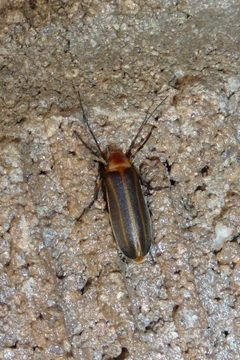
Pseudozonitis vaurieae is a of blister beetle in the Meloidae, first described by Enns in 1956. It is distributed across Central America and North America. As a member of the Nemognathinae , it possesses the characteristic elongated maxillary mouthparts adapted for feeding on flower nectar. The species is part of a that was revised by Enns in 1956, who proposed the genus Pseudozonitis to accommodate species previously placed in related genera.
Pronunciation
How to pronounce Pseudozonitis vaurieae: /ˌsjuːdoʊzoʊˈnaɪtɪs vɔːˈrjeɪ.iː/
These audio files are automatically generated. While they are not always 100% accurate, they are a good starting point.
Identification
Members of Pseudozonitis can be distinguished from related such as Zonitis and Nemognatha by specific morphological features of the mouthparts and body structure. P. vaurieae specifically was described by Enns in 1956, though detailed diagnostic characters distinguishing it from are not readily available in the provided sources. The genus is characterized by with elongated, adapted for nectar feeding, typical of the Nemognathinae .
Images
Distribution
Central America and North America. The has been recorded in Middle America and North America according to distribution records.
Similar Taxa
- Pseudozonitis arizonicaBoth are congeneric in the Pseudozonitis, sharing the characteristic elongated maxillary mouthparts of Nemognathinae blister beetles. P. arizonica was also treated in Enns' 1956 revision.
- Zonitis speciesHistorically related; Enns (1956) separated Pseudozonitis from Zonitis based on morphological differences in mouthpart structure and other characters. The two are similar in overall body form and flower-visiting .
- Nemognatha speciesMembers of the same (Nemognathinae) with similarly elongated for nectar feeding. Nemognatha are generally larger and have distinct differences in maxillary structure and body proportions.