
Eupomphini
J.L. LeConte, 1862
Genus Guides
7- Cordylospasta
- Cysteodemus(Desert Spider Beetles)
- Eupompha
- Megetra(Red-banded Blister Beetles)
- Phodaga
- Pleuropasta
- Tegrodera(iron cross blister beetles)
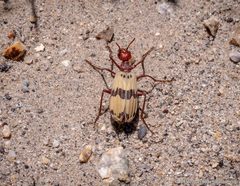
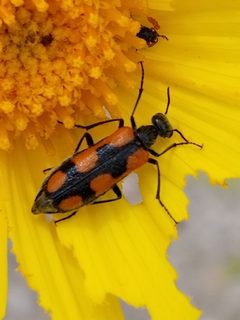
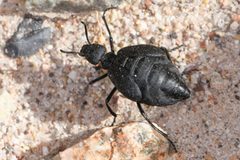
Eupomphini is a tribe of blister beetles (Meloidae) comprising approximately 7 and more than 20 described . Members exhibit , a complex developmental pattern involving dramatically different larval forms. The tribe includes notable genera such as Tegrodera (iron cross blister beetles) and Cysteodemus (desert spider beetles). Species are primarily distributed in arid and semi-arid regions of North America.
Pronunciation
How to pronounce Eupomphini: /juːˈpɑmfɪnaɪ/
These audio files are automatically generated. While they are not always 100% accurate, they are a good starting point.
Images
Habitat
Arid and semi-arid environments including deserts and dry scrublands. Associated with sandy or loose soils that facilitate larval burrowing and -seeking .
Distribution
North America, with concentration in southwestern United States and adjacent Mexico. Range extends across desert and semi-desert regions.
Life Cycle
with parasitic larval stages. First instar larvae (triungulins) are active and seek , while subsequent instars become progressively less mobile and more -like.
Similar Taxa
- EpicautiniBoth are tribes within Meloinae; Epicautini contains more and broader geographic distribution, while Eupomphini is distinguished by more pronounced hypermetamorphic development and desert-adapted
- LyttiniRelated Meloinae tribe; Eupomphini differs in larval and body form, with Lyttini generally lacking the extreme hypermetamorphic specializations seen in Eupomphini
More Details
Notable Genera
Includes Tegrodera (iron cross blister beetles), Cysteodemus (desert spider beetles), Eupompha, Megetra, Phodaga, Pleuropasta, and Cordylospasta. Tegrodera aloga and related are among the most frequently encountered and studied members of the tribe.
Morphological Research
A 2023 morphometric study of and structures found that complex in Eupomphini are not associated with changes in general body shape, suggesting that behavioral evolution and morphological evolution may be decoupled in this lineage.