
Cyclocephalini
Laporte, 1840
Masked Chafers and Rice Beetles
Genus Guides
3- Ancognatha
- Cyclocephala(Masked Chafers)
- Dyscinetus(Rice Beetles)
Cyclocephalini is a tribe of scarab beetles within the Dynastinae, comprising 14 and over 500 . The tribe includes the most speciose genus of dynastines, Cyclocephala, with more than 350 species. Members are primarily Neotropical in distribution and are commonly known as masked chafers and rice beetles. These beetles are strongly associated with flowers, serving as and florivores, with many species exhibiting specialized relationships with palm inflorescences and other flowering plants.
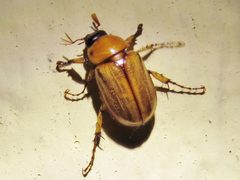
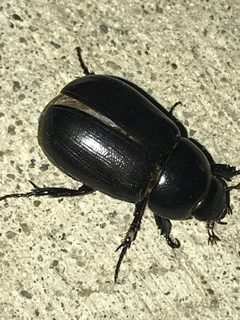
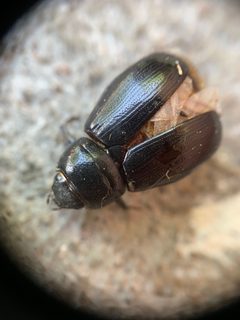
Pronunciation
How to pronounce Cyclocephalini: //ˌsaɪkloʊˌsɛfəˈlaɪnaɪ//
These audio files are automatically generated. While they are not always 100% accurate, they are a good starting point.
Identification
Cyclocephalini can be distinguished from other Dynastinae tribes by several morphological features. Males typically possess enlarged front , a characteristic historically used to define the tribe, though molecular evidence suggests this trait may be convergent. Members lack the prominent horns or other elaborate armature found in many other dynastine groups such as the rhinoceros beetles. The tribe includes the Cyclocephala (masked chafers), Dyscinetus (rice beetles), Ancognatha, Aspidolea, Chalepides, and others. within Cyclocephala display considerable and form cryptic complexes, making identification challenging without detailed examination of genitalia or cuticular chemical profiles.
Images
Habitat
Primarily Neotropical, occurring in diverse from lowland rainforests to Andean cloud forests. Many are associated with palm-dominated , including economically exploitable palms such as Acrocomia, Attalea, and Ceroxylon. Some species inhabit agricultural areas where they may become pests of crops.
Distribution
Native to the Neotropical region, with distribution spanning from Mexico through Central America and South America. The tribe is particularly diverse in tropical South America, with many to specific regions such as the Brazilian Pantanal, Andean cloud forests, and Amazon basin. Some species of Cyclocephala and Dyscinetus extend into the Nearctic region, occurring in the southern United States.
Diet
are florivorous, feeding on pollen, floral tissues, and nectar. Analysis of gut contents has confirmed pollen consumption in multiple . Larvae of at least some species are root-feeders or feed on decaying organic matter in soil, though specific dietary details for most remain poorly documented.
Life Cycle
Complete with , three larval instars, pupa, and stages. Larval development occurs in soil. The stages of several have been described, including Aspidolea singularis and Dyscinetus dubius, revealing typical scarabaeid adapted for subterranean life.
Behavior
are or , aggregating on flowers at twilight for feeding and mating. Multiple signaling modalities mediate reproductive : cuticular hydrocarbons function in sexual recognition and potentially as contact , while floral volatiles such as (3S,6E)-nerolidol and 2-alkyl-3-methoxypyrazines serve as cues. Mating occurs on flowers and may extend through the night. Some form large feeding and mating congregations within palm spathes.
Ecological Role
Significant of Neotropical palms and other flowering plants, particularly in dominated by Arecaceae. The tribe has been described as having major impacts on natural and agricultural ecosystems. Their florivorous habits can occasionally result in economic damage to emerging oil-yielding palm crops.
Human Relevance
Some are agricultural pests, particularly in palm oil and wine palm production. Cyclocephala amazona and C. distincta are known florivores associated with over 20 Neotropical palm species. 2-alkyl-3-methoxypyrazines have been identified as potent useful for monitoring and potentially managing these beetles in programs. The tribe is also of research interest for understanding chemical communication, , and speciation mechanisms.
Similar Taxa
- Other Dynastinae tribesCyclocephalini lacks the horns and elaborate armature characteristic of many other dynastine groups such as the Rhinoceros Beetles (Dynastini) and Elephant Beetles (Megasomini). Historically confused with Peltonotus, which was mistakenly placed in Cyclocephalini based on enlarged male front , but molecular data showed it belongs to a separate lineage within Dynastinae.
- RutelinaeSome Cyclocephalini , particularly Peltonotus (now excluded), possess characteristics intermediate between Rutelinae and Dynastinae, leading to historical classification uncertainty. True Cyclocephalini can be distinguished by their combination of dynastine affinities with the absence of ruteline-specific features.
More Details
Chemical ecology
Cuticular hydrocarbon profiles have been demonstrated to efficiently differentiate cyclocephaline and are believed to function in sexual recognition mechanisms, though only Cyclocephala ohausiana has shown significant sex-based differences in cuticular profiles. Floral volatiles including sesquiterpene alcohols and methoxypyrazines mediate -flower interactions.
Taxonomic history
The classification of Cyclocephalini has undergone significant revision. The tribe was defined in part by enlarged male front , but molecular phylogenetic studies have revealed that this trait is not phylogenetically diagnostic. Peltonotus, long considered a cyclocephaline, was removed from the tribe based on sequence data and is now recognized as sister to Parastasia.
Species diversity
The Cyclocephala alone contains over 350 , making it the most speciose genus in the Dynastinae. The tribe as a whole comprises more than 500 species across 14 genera, with ongoing descriptions of new , particularly from underexplored regions of South America.
Sources and further reading
- BugGuide
- Wikipedia
- iNaturalist taxon
- Catalogue of Life
- Noah Crockette: From an 11-Year-Old Bohart Intern to an 18-Year-Old Entomology Student at Cornell | Bug Squad
- The Beetle Boys Meet at the Bohart | Bug Squad
- Bug Spotlight | Entomology Research Museum
- A new species Cyclocephala Dejean, 1821 from Bolivia (Scarabaeidae: Dynastinae: Cyclocephalini)
- Cuticular lipid profiles of selected species of cyclocephaline beetles (Melolonthidae, Cyclocephalini)
- Immature Stages of Aspidolea Singularis (Coleoptera: Scarabaeidae: Cyclocephalini)
- Biology and management of the masked chafer Cyclocephala distincta Burmeister (Melolonthidae, Dynastinae, Cyclocephalini)
- Corrección de la distribución de Harposcelis paradoxus Burmeister, 1847 (Coleoptera: Scarabaeidae: Dynastinae: Cyclocephalini)
- Annotated catalog and bibliography of the cyclocephaline scarab beetles (Coleoptera, Scarabaeidae, Dynastinae, Cyclocephalini)
- A new species of Chalepides Casey, 1915 (Scarabaeidae, Dynastinae, Cyclocephalini) from the Pantanal of Brazil
- Scarab beetle Cyclocephala panthera (Coleoptera: Scarabaeidae: Dynastinae: Cyclocephalini): redescription and the first record from Colombia
- Description of the Larva and Pupa of Dyscinetus Dubius (Coleoptera: Melolonthidae: Dynastinae: Cyclocephalini)
- (3 S ,6 E )-Nerolidol-mediated rendezvous of Cyclocephalini beetles, Cyclocephala paraguayensis , in bottle gourd flowers
- A New Species ofAncognathaErichson (Coleoptera: Scarabaeidae: Dynastinae: Cyclocephalini) from Peru, with Distributions of PeruvianAncognathaSpecies
- A review of the distribution of Harposcelis paradoxus Burmeister, 1847 (Coleoptera: Scarabaeidae: Dynastinae: Cyclocephalini) with a new country record for Peru
- Ancognatha vulgaris (Melolonthidae, Cyclocephalini): a specialized pollen-feeding scarab associated with wax palms (Ceroxylon spp., Arecaceae) in Andean cloud forests of Colombia
- Behavioral traits and sexual recognition: multiple signaling in the reproductive behavior of Cyclocephala distincta (Melolonthidae, Cyclocephalini)
- 2‐Alkyl‐3‐methoxypyrazines are potent attractants of florivorous scarabs (Melolonthidae, Cyclocephalini) associated with economically exploitable Neotropical palms (Arecaceae)