
Dynastini
MacLeay, 1819
True Rhinoceros Beetles
Genus Guides
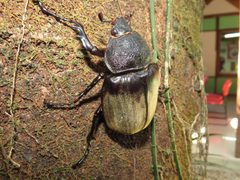
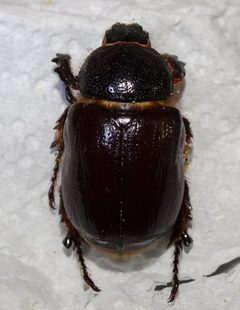
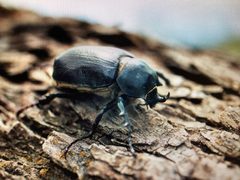
2Dynastini is a tribe of large scarab beetles commonly known as true rhinoceros beetles. The group includes some of the largest and most iconic beetles in the world, with males typically bearing prominent horns on the and pronotum used in combat. Notable include Dynastes (Hercules beetles), Megasoma, and Golofa. Members are primarily tropical and subtropical in distribution, with some reaching temperate regions of North America.
Pronunciation
How to pronounce Dynastini: //daiˈnæstɪnaɪ//
These audio files are automatically generated. While they are not always 100% accurate, they are a good starting point.
Identification
Dynastini can be distinguished from other dynastine tribes by the combination of large body size (often exceeding 50 mm), well-developed cephalic and/or pronotal horns in males, and with 9-10 segments. Females lack horns or bear only reduced . The pronotum is typically broad and often covers much of the elytral base. Members of the subtribe Dynastina (including Dynastes and Megasoma) are among the largest beetles in the Americas.
Images
Habitat
Tropical and subtropical forests, with some in temperate deciduous forests. Many species are associated with decaying wood in forest . Larvae develop in rotting wood or organic matter; are often found at sap flows on trees or attracted to lights.
Distribution
Primarily Neotropical, with extensions into the Nearctic. The tribe occurs from Argentina north through Central America and the Caribbean, with several reaching the eastern and southern United States. The Dynastes occurs from South America through Central America and into the eastern United States; Megasoma ranges from South America into the southwestern United States.
Diet
Larvae feed on decaying wood and organic matter. feed on tree sap and rotting fruit; some have been observed scraping bark to induce sap flow.
Life Cycle
Complete with prolonged larval development. Larval stages may require 12-18 months or longer in some . occurs in pupal chambers constructed in wood or soil. are relatively long-lived for beetles, surviving several months.
Behavior
Males engage in combat using horns to compete for access to females. Combat involves pushing and wrestling matches, with horn size and strength determining outcomes. are primarily and strongly attracted to light. Some stridulate or produce sounds, though this is not universal in the tribe.
Ecological Role
Larvae function as decomposers, breaking down decaying wood and recycling nutrients. may contribute to nutrient cycling through feeding on rotting fruit and sap flows.
Human Relevance
Popular in insect collections and the pet trade due to large size and dramatic appearance. Larvae of some occasionally damage lawns or crops. Attracted to artificial lights, sometimes resulting in mortality from or human interference. Subject of ecological and behavioral research, particularly regarding and horn .
Similar Taxa
- OryctiniAnother tribe of dynastine scarabs with horned males; distinguished by different pronotal and elytral structure, and generally less extreme horn development in most .
- PhileuriniTribe of dynastine scarabs with flattened, parallel-sided bodies; often mistaken for passalid beetles. Lacks the robust, convex body form and prominent horns typical of Dynastini.
- CyclocephaliniTribe of dynastine scarabs containing smaller, less conspicuous often mistaken for May beetles; lacks horns and has different antennal club structure.
More Details
Subtribal classification
Dynastini contains three subtribes: Dynastina (including Dynastes, Megasoma, Golofa, Augosoma), Chalcosomina (including Chalcosoma, Eupatorus, Haploscapanes, Pachyoryctes, Debeckius), and Xylotrupina (including Xylotrupes, Allomyrina, Endebius).
Size records
Members of Dynastini include some of the largest beetles by weight in the Americas. Megasoma are among the heaviest-bodied beetles in the New World, though the African Goliathus beetles ( Cetoniinae) hold the overall weight record.