
Parastasia
Westwood, 1841
Species Guides
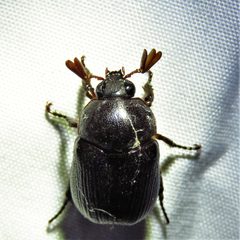
1- Parastasia brevipes(Long-clubbed Scarab)
Parastasia is a of scarab beetles in the Scarabaeidae, currently classified within the Rutelinae but with strong molecular evidence suggesting placement in the subfamily Dynastinae near the tribe Cyclocephalini. The genus occurs in Southeast Asia and includes at least four described . are associated with the flowers of aroid plants (Araceae), particularly Amorphophallus and Epipremnum.
Identification
Parastasia resemble Rutelinae in general body form but share molecular affinities with Dynastinae. They lack the enlarged front characteristic of male Cyclocephalini. Species within the are distinguished by subtle differences in body proportions and coloration, though specific diagnostic features require examination. The genus is most reliably identified through molecular phylogenetic analysis, which places it as sister to Peltonotus.
Images
Habitat
Associated with tropical and subtropical forest where aroid plants occur. are found specifically within and around the spathes of Amorphophallus and Epipremnum flowers.
Distribution
Southeast Asia, including Laos and surrounding regions. Records indicate presence in the Oriental biogeographic region.
Host Associations
- Amorphophallus - flower visitor form feeding and mating inside spathes
- Epipremnum - flower visitor form feeding and mating inside spathes
Behavior
form large feeding and mating congregations of dozens of individuals inside and around the spathe of aroid flowers. This is similar to that observed in the related Peltonotus.
Ecological Role
of aroid plants (Araceae); facilitate pollen transfer while feeding and mating within flower spathes.
Similar Taxa
- PeltonotusForms similar feeding and mating in aroid flowers; historically confused with Parastasia due to shared behavioral and morphological traits; molecular evidence confirms close phylogenetic relationship and suggests both belong in Dynastinae rather than Rutelinae
- CyclocephalaSimilar body form and flower-visiting , but Cyclocephala males have enlarged front (absent in Parastasia) and molecular data place Cyclocephalini separately from Parastasia
More Details
Taxonomic history
Parastasia has been classified in Rutelinae since its description, but sequence data from fresh specimens provide very strong support for its placement within Dynastinae, closely related to Peltonotus. This represents a significant case of convergent morphological evolution misleading traditional .
Classification uncertainty
The exemplifies ongoing challenges in scarab beetle , where molecular has revealed that morphological characters traditionally used to define do not always reflect evolutionary relationships.