
Saprininae
Blanchard, É., 1845
clown beetles
Genus Guides
6Saprininae is a of clown beetles within the Histeridae, comprising over 50 and approximately 800 described . The group is globally distributed but shows notable biogeographic variation, with particular diversity in arid and coastal . Members exhibit diverse ecological associations, including free-living , myrmecophiles, and .
Pronunciation
How to pronounce Saprininae: /sæˈpraɪnɪniː/
These audio files are automatically generated. While they are not always 100% accurate, they are a good starting point.
Identification
Distinguished from other histerid by combinations of antennal club structure, prosternal process configuration, and mesosternal . Separation from Histerinae and other subfamilies requires examination of genitalic and characters. Within Saprininae, tribal assignment (e.g., Saprinini, Hypocaccini) relies on tarsal formula, elytral striation patterns, and body form.
Images
Appearance
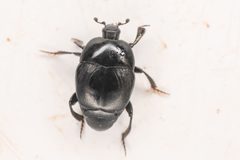
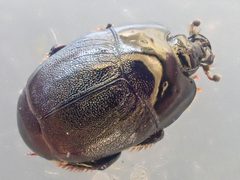
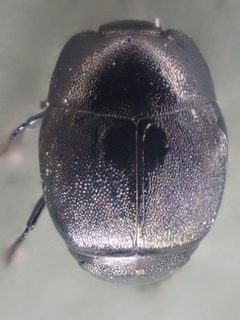
typically exhibit the characteristic histerid body plan: compact, oval to elongate-oval form with short that may expose one or more abdominal tergites. Many display metallic coloration, particularly on the elytra. Legs are often flattened, an for rapid movement and burrowing. Some psammophilous species possess swollen legs accommodating enlarged musculature for digging through wet sand.
Habitat
associations are diverse and -dependent. Free-living occupy various terrestrial environments including forests, grasslands, and arid zones. Psammophilous members inhabit coastal beaches, living under coastal wrack and seaweed in sand-associated habitats. Myrmecophilous and termitophilous species occur within nests.
Distribution
distribution with representation across all major biogeographic regions. Poorly represented in the Australopacific Region relative to global diversity, with approximately 40 in 12 (nine native, three introduced). Documented from Arabian Peninsula, Algerian Sahara, Australia, and numerous other localities.
Diet
Predominantly predatory, feeding on larvae and of small arthropods. Some prey specifically on fly larvae. Occasional filter-feeding on reported in some .
Host Associations
Behavior
(death-feigning) observed when threatened. Psammophilous exhibit digging facilitated by muscular, swollen legs. Myrmecophilous and termitophilous species demonstrate specialized nest-inhabiting behaviors.
Ecological Role
of small arthropods in multiple , including coastal beach environments. Potential agents through on pest insect larvae.
Human Relevance
Some may contribute to of pest insects through on larvae. Otherwise minimal direct human interaction.
Similar Taxa
- HisterinaeAnother histerid ; distinguished by antennal club structure, prosternal and mesosternal , and genitalic characters.
- TrypanaeinaeHisterid with overlapping ; separation requires detailed examination of mouthpart and thoracic configuration.
More Details
Taxonomic research significance
The Australopacific fauna has been subject to intensive revisionary study, revealing previously undocumented diversity including the first truly myrmecophilous and termitophilous from the region. The Saprinodes remains particularly poorly known, with collection records limited to pitfall and intercept traps and undescribed.
Psammophilous adaptations
Members of Hypocaccini, Exaesiopus, and Neopachylopus exhibit semi-psammophilous , with morphological modifications for beach-dwelling including leg musculature specialized for burrowing in wet sand.