
Saprinini
Blanchard, 1845
Genus Guides
1- Saprinus(clown beetles)
Saprinini is a tribe of clown beetles (Histeridae) characterized by small to medium body size, often with metallic coloration and reduced elytral . Members are primarily associated with decaying organic matter and carrion, where they prey on fly larvae and other insects. The tribe is in distribution and contains numerous , including the widespread *Saprinus* and *Euspilotus*.
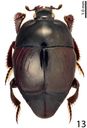
Pronunciation
How to pronounce Saprinini: /sæ.prɪˈnaɪ.naɪ/
These audio files are automatically generated. While they are not always 100% accurate, they are a good starting point.
Identification
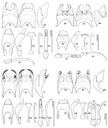
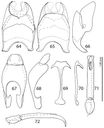
Saprinini can be distinguished from other Histeridae tribes by the combination of reduced elytral (often 1–3 complete striae versus 4–5 in related groups), small body size, and frequently metallic coloration. The pronotal marginal structure differs from the Exosternini and Histerini. Examination of the mesosternal keel and prosternal lobe structure is often required for definitive identification. Genitalia examination may be necessary for -level determination.
Images
Habitat
Primarily associated with decaying organic matter including carrion, , decaying fungi, and compost. Some inhabit bird and mammal nests. Found in terrestrial environments from open fields to forest edges. Moisture levels vary by species, with some preferring dry carrion and others requiring more humid decaying substrates.
Distribution
distribution with representatives on all continents except Antarctica. Highest diversity in tropical and subtropical regions. Well-represented in the Palearctic, Nearctic, Neotropical, Afrotropical, and Australasian regions.
Seasonality
Activity patterns vary by region; in temperate zones, most abundant during spring through autumn when temperatures support carrion fly . Some overwinter as . Tropical species may be active year-round.
Diet
Predatory, primarily feeding on and larvae of Diptera (flies) associated with carrion and decay. Some have been observed consuming other larvae and small in decaying organic matter.
Life Cycle
Complete with , larval, pupal, and stages. Larvae are campodeiform (elongate, active) and predatory. Development time varies with temperature and food availability; under favorable conditions, some complete development in 2–3 weeks. Adults are relatively long-lived and may reproduce multiple times.
Behavior
are rapid runners and capable of . Characteristic of remaining motionless when disturbed, then moving quickly when threat passes. frequently observed at carrion and . Some exhibit parental care or communal oviposition near food sources.
Ecological Role
Important in carrion and , regulating fly and contributing to nutrient cycling. Their presence and patterns are used in to estimate postmortem intervals. Serve as food for larger and small vertebrates.
Human Relevance
Used in as indicators of decomposition stage and postmortem interval. Some are beneficial in livestock operations by reducing fly in manure. Occasionally considered nuisance pests when aggregating at carrion near human habitation. No known agricultural or medical significance.
Similar Taxa
- HisteriniSimilar body form but distinguished by complete elytral (4–5 striae) and generally larger body size; prosternal and mesosternal structures differ
- ExosterniniOverlapping size range and preferences; separated by pronotal margin structure and details of antennal club
- TrypanaeiniSimilar reduced but distinguished by different prosternal keel structure and association with nests rather than carrion
More Details
Forensic importance
Saprinini are among the earliest beetles to arrive at carrion in many regions, often appearing within 24–48 hours postmortem. Their predictable patterns make them valuable for forensic investigations, particularly in cases where fly evidence is limited.
Taxonomic complexity
The tribe has undergone significant taxonomic revision, with many historically placed in Saprinini now reassigned to Exosternini or other tribes. Current classification relies heavily on internal skeletal structures visible only through dissection.