
Hypocaccini
Genus Guides
4- Hypocacculus(clown beetles)
- Hypocaccus(clown beetles)
- Neopachylopus(clown beetles)
- Philoxenus
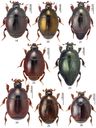
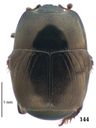
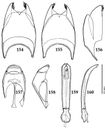
Hypocaccini is a tribe of clown beetles (Histeridae: Saprininae) distributed across the Arabo-Saharan region. Members include psammophilous such as Hypocaccus, Exaesiopus, and Neopachylopus, which are adapted to sandy coastal . Recent taxonomic work has described new from the Arabian Peninsula and Algerian Sahara, expanding the known diversity of this group.
Pronunciation
How to pronounce Hypocaccini: /ˌhaɪ.poʊ.kækˈsɪ.ni/
These audio files are automatically generated. While they are not always 100% accurate, they are a good starting point.
Identification
Tribe-level identification requires phylogenetic analysis; morphological characters alone are insufficient to distinguish Hypocaccini from other Saprininae tribes. The tribe includes with psammophilous adaptations such as swollen legs with enlarged musculature for digging in sand.
Images
Habitat
Psammophilous (sand-associated) environments, particularly coastal beaches. Semi-psammophilous members possess swollen legs adapted for digging through wet sand. Specimens have been collected under coastal wrack and seaweed.
Distribution
Arabo-Saharan region, including the Arabian Peninsula (Qatar, Yemeni Island of Kamaran), Algerian Sahara (Sidi Bel Abbès near Oran), and United Arab Emirates.
Diet
Predatory; feeds on larvae and of tiny arthropods, particularly flies.
Behavior
Digging through wet sand using swollen legs with enlarged musculature; associated with coastal wrack and seaweed deposits.
Ecological Role
of tiny arthropods in coastal beach .
More Details
Phylogenetic placement
Assignment of to Hypocaccini is based on phylogenetic study (Lackner et al. 2024), not solely on morphological characteristics.
Taxonomic uncertainty
Two newly described (Neopachylopus pharkidodes and N. penatii) are tentatively assigned to Neopachylopus, indicating ongoing taxonomic refinement within the tribe.