
Hylastes porculus
Erichson, 1836
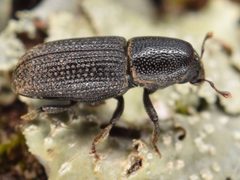
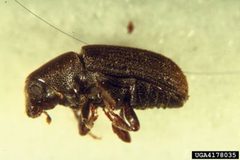
Hylastes porculus is a crenulate bark beetle in the Curculionidae, found in North America. The has been documented as a of pathogenic fungi, including Leptographium terebrantis, Leptographium procerum, and Ophiostoma ips, to wounded roots of red pine (Pinus resinosa). Its role in transmitting these fungi implicates it in red pine decline .
Pronunciation
How to pronounce Hylastes porculus: /hɪˈlæstiːz ˈpɔrk.jʊləs/
These audio files are automatically generated. While they are not always 100% accurate, they are a good starting point.
Identification
A member of the tribe Hylastini; as a crenulate bark beetle, likely exhibits characteristic features of the Hylastes including small size and association with coniferous . Specific diagnostic features distinguishing H. porculus from such as Hylastes ater or other North American Hylastes are not documented in available sources.
Images
Distribution
North America. Documented presence in Canadian provinces: Manitoba, New Brunswick, Nova Scotia, and Ontario.
Host Associations
- Pinus resinosa - of pathogenic fungi to wounded rootsField-collected transmitted Leptographium terebrantis (55% of trials), Leptographium procerum (40%), and Ophiostoma ips (5%) to wounded red pine roots in caging experiments.
Ecological Role
of pathogenic fungi (Leptographium terebrantis, Leptographium procerum, Ophiostoma ips) associated with red pine decline .
Human Relevance
Potential forest health concern due to role in transmitting pathogenic fungi to red pine, a commercially important timber .
Similar Taxa
- Hylastes aterCongeneric bark beetle with overlapping geographic range and conifer associations; specific distinguishing characters not documented in available sources.
- Dendroctonus valensCo-occurs as of similar pathogenic fungi to red pine; belongs to different within Scolytinae, generally larger and with different gallery patterns.
More Details
Fungal Vectoring Evidence
Caging experiments demonstrated that field-collected Hylastes porculus can transmit three of Ophiostomatales fungi to wounded red pine roots. Transmission rates were highest for Leptographium terebrantis (55%) and Leptographium procerum (40%), with lower rates for Ophiostoma ips (5%). This establishes the species' capability as a fungal , though natural transmission dynamics in uncontrolled settings remain uncharacterized.