
Naupactus
Dejean, 1821
White-fringed Weevils
Species Guides
5- Naupactus cervinus(Fuller rose beetle)
- Naupactus leucoloma(white-fringed weevil)
- Naupactus pallidulus
- Naupactus pallidus
- Naupactus peregrinus
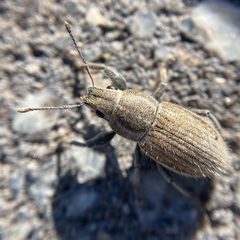
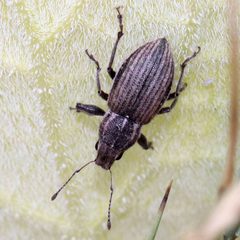
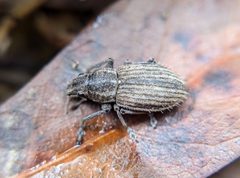
Naupactus is a large of weevils in the Curculionidae, commonly known as white-fringed weevils. The genus comprises exclusively Neotropical , several of which have been introduced to other regions and become significant agricultural pests. Members of this genus are characterized by reduced humeri and lack of metathoracic wings, traits formerly used to separate them into the genus Graphognathus before taxonomic revision. Some species exhibit parthenogenetic , and flightless are common.
Pronunciation
How to pronounce Naupactus: /naʊˈpæktəs/
These audio files are automatically generated. While they are not always 100% accurate, they are a good starting point.
Identification
Naupactus are recognized by their distinctive white fringe of setae along the lateral margins of the , which gives the group its . The reduced humeri and absence of metathoracic wings distinguish them from many other weevil . Males typically exhibit a narrower body form compared to females. Species-level identification requires examination of genitalia and other subtle morphological characters, making field identification to species challenging.
Images
Distribution
Native to the Neotropical region, with occurring in Argentina, Brazil, Chile, Paraguay, and Uruguay. Several species have been introduced to North America, Australia, New Zealand, and other regions worldwide.
Behavior
are flightless in many . Some species exhibit feeding . Parthenogenetic has been documented in related species within the tribe Naupactini.
Human Relevance
Several Naupactus are significant agricultural pests. Naupactus leucoloma (white-fringed weevil) and Naupactus cervinus (Fuller rose beetle) have been introduced worldwide and feed on a broad range of crop plants. Naupactus xanthographus is a pest of grapevines in South America, known as "burrito de la vid" in Chile and "mulita de la vid" in Argentina. Naupactus godmanni is a pest for citrus exports to Japan, with capable of surviving packinghouse processing and cold storage.
Similar Taxa
- GraphognathusFormerly treated as a separate based on reduced humeri and lack of metathoracic wings, but synonymized with Naupactus by Lanteri and Marvaldi (1995) as these traits were deemed insufficient for generic distinction.
- PantomorusClosely related within Naupactini; some Naupactus were formerly placed here. Distinguished by subtle differences in rostral and genitalic characters requiring expert examination.
Sources and further reading
- BugGuide
- GBIF taxonomy match
- iNaturalist taxon
- NCBI Taxonomy
- Catalogue of Life
- Curculionidae | Beetles In The Bush | Page 3
- An Inordinate Fondness #9 | Beetles In The Bush
- Anthribidae | Beetles In The Bush
- An Inordinate Fondness | Beetles In The Bush
- Biology of the white-fringed beetle (naupactus leucoloma boh.) /
- Fuller Rose Beetle, Naupactus godmanni (Crotch) (Insecta: Coleoptera: Curculionidae)
- Naupactus xanthographus . [Distribution map].