
Colopterus
Erichson, 1842
Species Guides
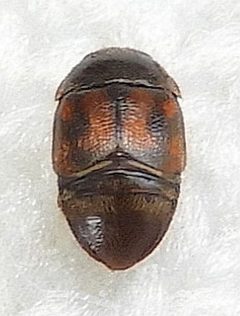
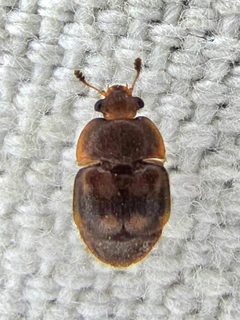
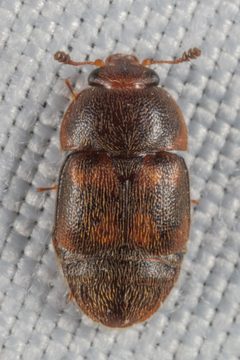
7Colopterus is a of sap-feeding beetles in the Nitidulidae, containing approximately 10 described . Species in this genus are associated with fermenting substrates and plant material. At least one species, C. truncatus, has been documented as a seed of Inga marginata and produces male-specific .
Pronunciation
How to pronounce Colopterus: /kəˈlɒptərəs/
These audio files are automatically generated. While they are not always 100% accurate, they are a good starting point.
Identification
Members of Colopterus can be distinguished from related nitidulid by their association with specific substrates and, in the case of C. truncatus, by the production of male-specific containing (2E,4E,6E)-4,6-dimethyl-2,4,6-nonatriene as the major component. Cross-attraction to C. truncatus pheromone components occurs in three Carpophilus (C. lugubris, C. antiquus, and C. brachypterus), suggesting careful identification is needed where these genera co-occur.
Images
Habitat
Associated with fermenting substrates; C. truncatus specifically associated with seeds of Inga marginata in riparian forests, secondary vegetation, forest edges, riverbanks, roadsides, Atlantic and Amazon rainforests, and semi-deciduous broadleaf forests of the Paraná basin.
Distribution
North America (Vermont, United States); South America (Brazil, first record of C. truncatus). plant Inga marginata extends throughout South and Central America.
Diet
Sap-feeding ( level); seeds of Inga marginata (C. truncatus specifically).
Host Associations
- Inga marginata - seed C. truncatus specifically; seeds are consumed
- Bruchophagus sp. - of C. truncatus
Behavior
Males of C. truncatus produce that attract both males and females. Pheromone activity is synergized by fermenting whole-wheat bread dough.
Ecological Role
Seed (C. truncatus on Inga marginata); part of a tritrophic interaction with potential implications for seed and plant . Sap-feeding habits suggest involvement in decomposition processes.
Similar Taxa
- Carpophilus lugubrisCross-attraction to C. truncatus components observed; may be attracted to same pheromone lures in field conditions
- Carpophilus antiquusCross-attraction to C. truncatus components observed; may be attracted to same pheromone lures in field conditions
- Carpophilus brachypterusCross-attraction to C. truncatus components observed; may be attracted to same pheromone lures in field conditions
More Details
Pheromone chemistry
C. truncatus males produce four specific compounds: (2E,4E,6E)-3,5-dimethyl-2,4,6-octatriene, (2E,4E,6E)-4,6-dimethyl-2,4,6-nonatriene (major component), (2E,4E,6E,8E)-3,5,7-trimethyl-2,4,6,8-decatetraene, and (2E,4E,6E,8E)-4,6,8-trimethyl-2,4,6,8-undecatetraene (not electroantennographically active).
Data limitations
Most detailed ecological and behavioral information available only for C. truncatus. -level generalizations for , diet, and distribution are not well supported beyond this single .
Sources and further reading
- BugGuide
- Wikipedia
- GBIF taxonomy match
- iNaturalist taxon
- NCBI Taxonomy
- Catalogue of Life
- Male-produced Aggregation Pheromone of Colopterus truncatus: Structure, Electrophysiological, and Behavioral Activity
- Tritrophic interaction": first record of Colopterus truncatus (Coleoptera: nitidulidae) and its parasitoid Bruchophagus sp. on Inga marginata SEEDS