
Carpophilus brachypterus
(Say, 1825)
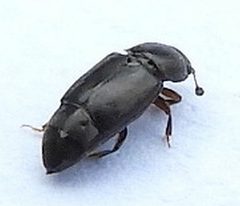
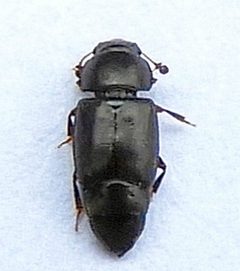
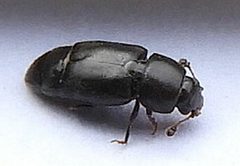
Carpophilus brachypterus is a sap-feeding beetle in the Nitidulidae, native to North America. The was described by Thomas Say in 1825. Like other members of the Carpophilus, it is associated with fermenting plant materials and decaying fruit. The species is distinct from the Carpophilus truncatus, which has become a major agricultural pest in almonds and pistachios.
Pronunciation
How to pronounce Carpophilus brachypterus: /ˌkɑːrˈpɒfɪləs brəˈkɪptərəs/
These audio files are automatically generated. While they are not always 100% accurate, they are a good starting point.
Identification
Distinguished from the Carpophilus truncatus by native North American distribution and earlier taxonomic description (1825 vs. 2020 confirmation). The Carpophilus is characterized by compact oval bodies, short that may expose part of the , and clubbed . Specific diagnostic features for C. brachypterus require examination of genitalia and wing ; the specific epithet 'brachypterus' refers to shortened wings.
Images
Habitat
Associated with fermenting plant materials, decaying fruit, and sap flows. Specific microhabitat preferences for this are not well documented.
Distribution
North America. Documented presence in Canada (Manitoba, New Brunswick, Nova Scotia) and the United States.
Diet
Sap-feeding; associated with fermenting plant materials and decaying fruit. Specific feeding habits for this are not separately documented from .
Ecological Role
Contributes to decomposition of fermenting plant materials and nutrient cycling. Specific ecological functions for this are not separately documented.
Human Relevance
Not known to be an agricultural pest. Distinguished from the Carpophilus truncatus, which causes significant damage to almond and pistachio crops in Australia, Argentina, Italy, and California.
Similar Taxa
- Carpophilus truncatus pest causing major damage to tree nut crops; distinguished by non-native status, more recent taxonomic confirmation (2020), and documented agricultural pest not attributed to C. brachypterus
- Carpophilus hemipterusRelated sap-feeding beetle in same ; distinguished by specific morphological characters and different distribution patterns
More Details
Taxonomic history
Described by Thomas Say in 1825, making it one of the earlier described in the Carpophilus.