
Hyperaspidini
Mulsant, 1846
Genus Guides
5- Blaisdelliana
- Helesius
- Hyperaspidius
- Hyperaspis(Sigil Lady Beetles)
- Thalassa
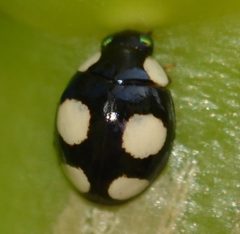
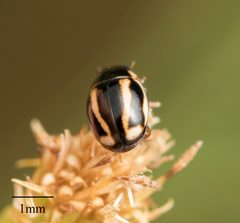
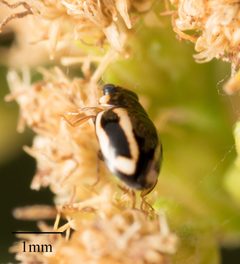
Hyperaspidini is a tribe of lady beetles (Coccinellidae) established by Mulsant in 1846, currently classified within Coccinellinae. The tribe contains approximately 16 , though generic boundaries remain fluid with some authorities treating Brachiacanthini and Selvadiini as synonyms. in this tribe are predominantly small, often inconspicuous lady beetles with documented predatory habits on mealybugs (Pseudococcidae) and aphids (Aphididae).
Pronunciation
How to pronounce Hyperaspidini: //haɪˌpɜːræˈspɪdənaɪ//
These audio files are automatically generated. While they are not always 100% accurate, they are a good starting point.
Identification
Tribe-level includes small body size relative to other Coccinellinae, often with reduced or subtle color patterns compared to the conspicuously marked Coccinellini. Male genitalia provide -level diagnostic characters, with distinctive sclerotized structures of the tegmen and lobe. The Hyperaspis, which dominates regional faunas in Iran and the Indian subcontinent, is distinguished from related genera by combinations of tibial spurs, elytral punctation, and male genitalic .
Images
Distribution
Documented from multiple regions including Iran (12 ), the Indian subcontinent (6 species in a single ), and broadly across the Americas based on iNaturalist observations. The tribe has a distribution with regional faunas dominated by the genus Hyperaspis in the Palearctic and Oriental regions.
Diet
Predatory on mealybugs (Pseudococcidae) including Phenacoccus solenopsis, P. manihoti, P. solani, and ; also aphids (Aphididae) including Aphis gossypii, A. aurantii, A. craccivora, and Myzus persicae. Some have been observed preying on Orthezia insignis (Ortheziidae).
Host Associations
- Phenacoccus solenopsis - preySolenopsis mealybug, utilized for
- Phenacoccus manihoti - preycassava mealybug
- Phenacoccus solani - preySolanum mealybug
- Maconellicoccus hirsutus - prey
- Orthezia insignis - preyOrtheziidae
- Aphis gossypii - preymost frequently recorded prey in Indian studies
- Aphis aurantii - prey
- Aphis craccivora - prey
- Myzus persicae - prey
Behavior
Predatory focused on Hemiptera; utilized in programs for agricultural pest management. Specific behavioral details beyond general not documented in available sources.
Ecological Role
Aphidophagous and coccidophagous with established role in of agricultural pests, particularly mealybugs on crops including Capsicum, Citrus, Solanum, Malus, and Camellia.
Human Relevance
Deployed as agents for mealybug in agriculture; specific have been evaluated or utilized for management of Phenacoccus species on cotton, cassava, and solanaceous crops.
Similar Taxa
- BrachiacanthiniHistorically considered synonymous with Hyperaspidini; some authors retain as valid tribe based on morphological distinctions. Generic composition overlaps with disputed placement of Brachiacantha, Cleothera, Cyrea, and related in either tribe.
- SelvadiiniPreviously synonymized with Hyperaspidini; current status varies by authority.
- CoccinelliniLarger, more conspicuously colored lady beetles with which Hyperaspidini share Coccinellinae; distinguished by smaller size, often reduced patterning, and different prey associations.
More Details
Systematic instability
Tribal classification has undergone substantial revision. Hyperaspidini was formerly placed in Hyperaspidinae, but current systems recognize only 2-3 subfamilies in Coccinellidae, placing Hyperaspidini in Coccinellinae. The tribes Brachiacanthini and Selvadiini have been treated as synonyms of Hyperaspidini by some authors, though Brachiacanthini is retained as valid by later .
Regional generic diversity
While the global tribe contains 16+ (Blaisdelliana, Clavatus, Clypeaspis, Diazonema, Erratodiomus, Helesius, Hyperaspidius, Hyperaspis, Magnodiomus, Menoscelis, Mimoscymnus, Peruaspis, Planorbata, Prognataspis, Selvadius, Tenuisvalvae, Thalassa), regional faunas are often dominated by single genera: Hyperaspis in Iran (12 ) and the Indian subcontinent (6 species).
Sources and further reading
- BugGuide
- Wikipedia
- iNaturalist taxon
- NCBI Taxonomy
- Catalogue of Life
- Review of the tribe Hyperaspidini Mulsant (Coleoptera: Coccinellidae) from Iran
- A review of the tribe Hyperaspidini (Coleoptera: Coccinellidae) from the Indian region
- Tri-trophic Associations of Aphidophagous Ladybirds of the Tribes Hyperaspidini, Noviini, Platynaspidini and Sticholotidini (Coccinellidae: Coleoptera) in India