
Orthezia
Bosc, 1784
Species Guides
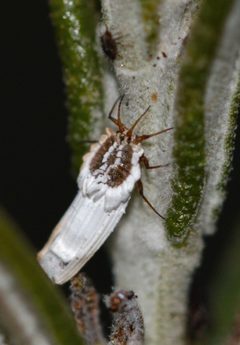
1Orthezia is a of scale insects in the Ortheziidae, first described by Bosc in 1784. in this genus are found in Eurasia and Northern America. The genus includes over 20 described species, with associations ranging from grasses to woody plants. Orthezia species are part of the diverse of ortheziid scale insects, though specific biological details for most species remain poorly documented.
Pronunciation
How to pronounce Orthezia: /ɔɹˈθɛziə/
These audio files are automatically generated. While they are not always 100% accurate, they are a good starting point.
Identification
Orthezia are distinguished from other insect by features of the Ortheziidae: females typically possess a waxy ovisac that covers the body and , and have well-developed legs and compared to many other scale insects. Species-level identification requires examination of microscopic characters including glandular structures, setal patterns, and body ornamentation. Separation from the related genus Praelongorthezia (which includes the economically significant citrus orthezia) relies on detailed morphological analysis.
Images
Habitat
of Orthezia have been recorded from diverse plant including grasses, herbaceous plants, and woody vegetation. Specific requirements vary by species; for example, Orthezia urticae is associated with nettles, while Orthezia juniperi occurs on juniper. The occupies terrestrial environments where suitable host plants occur.
Distribution
The Orthezia has a distribution spanning Eurasia and Northern America. GBIF records confirm presence in Denmark, Norway, and Sweden. Individual show varying ranges: Orthezia urticae has a broad Palearctic distribution, while others such as Orthezia japonica and Orthezia shirakensis are restricted to East Asia, and Orthezia maroccana and Orthezia tartallyi are known from North Africa.
Diet
Orthezia are phloem-feeding scale insects that extract plant sap from tissues. Specific host associations documented for various species include: grasses (Orthezia graminicola), nettles (Orthezia urticae), juniper (Orthezia juniperi), agrimony (Orthezia argrimoniae), and clubmosses (Orthezia selaginellae). The degree of polyphagy versus host specificity varies among species and has been observed to be narrow in some cases.
Host Associations
- Urtica - Orthezia urticae
- Juniperus - Orthezia juniperi
- Agrimonia - Orthezia argrimoniae
- Selaginella - Orthezia selaginellae
- Poaceae - Orthezia graminicola
- Ambrosia - Orthezia ambrosicola
- Cheilanthes - Orthezia cheilanthi
- Solidago - Orthezia solidaginis
Life Cycle
details are -specific and incompletely documented for most Orthezia species. Based on observations of related ortheziids, females are and deposit within a protective waxy ovisac. Nymphs emerge with functional legs and , permitting mobility unlike many sedentary scale insects. Development includes multiple instars before reaching adulthood. Duration of life stages has been observed to vary considerably with environmental conditions in related species.
Behavior
Females retain mobility throughout their , a trait distinguishing Ortheziidae from many other insect . This permits relocation on plants. Waxy secretions form a protective covering over the body and . Males, where present, are typically winged and short-lived.
Ecological Role
Orthezia function as phloem-feeding herbivores on their plants. Their feeding activity may contribute to plant stress, though densities are generally not sufficient to cause significant damage in natural settings. They serve as prey for and , though specific trophic relationships are poorly documented.
Human Relevance
Most Orthezia have minimal direct economic impact. The is not known to contain major agricultural pests, unlike the related genus Praelongorthezia (which includes the citrus orthezia, a significant pest of citrus and other crops). Orthezia species may occasionally be encountered in horticultural settings but are generally considered minor or incidental pests.
Similar Taxa
- PraelongortheziaClosely related within Ortheziidae; distinguished by morphological details of the female and male. Praelongorthezia praelonga is a major agricultural pest, whereas Orthezia are generally not economically significant.
- NewsteadiaAnother in Ortheziidae; separation relies on characteristics of the waxy covering, body shape, and microscopic features of the .
- OrtheziolaSmaller related in Ortheziidae; distinguished by body proportions and details of the ovisac structure.
More Details
Taxonomic history
The Orthezia was established by Bosc in 1784 and has undergone numerous revisions. descriptions span from 1758 (Orthezia urticae, originally Coccus urticae Linnaeus) to 2004 (Orthezia maroccana and Orthezia tartallyi). The genus has been variously classified within Coccoidea, with modern treatments placing it in Ortheziidae within the Coccidomorpha.
Research gaps
Biological and ecological information is sparse for most Orthezia . records exist for many species but are often based on limited collections. data, natural enemy relationships, and remain largely unstudied.