
Lilioceris lilii
(Scopoli, 1763)
lily leaf beetle, scarlet lily beetle, red lily beetle
The lily leaf beetle, Lilioceris lilii, is a leaf beetle in the Chrysomelidae native to Asia and now widespread across Eurasia and North America. It is a herbivore of lilies and related plants in the family Liliaceae, feeding on leaves, stems, buds, and flowers. Both and larvae cause significant damage to plants, with larvae capable of complete defoliation. The has become a serious pest in gardens and natural areas where lilies occur, including threatening native and endangered Lilium species in North America.
Pronunciation
How to pronounce Lilioceris lilii: /ˌlɪliəˈsɛrɪs ˈlɪliˌaɪ/
These audio files are automatically generated. While they are not always 100% accurate, they are a good starting point.
Identification
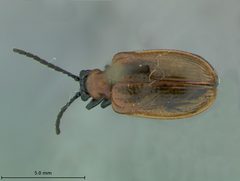
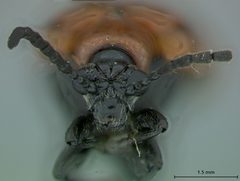
are distinctive with bright scarlet-red and pronotum contrasting with black , legs, and underside. Body length averages 7–8 mm, with females slightly larger than males. Larvae are orange to reddish with black heads, bearing a characteristic fecal shield—a mass of excrement carried on the back. The combination of red-and-black adult coloration and the larval fecal shield distinguishes this from other chrysomelids on Liliaceae.
Images
Habitat
Closely associated with plants in the Liliaceae, including garden plantings, naturalized , and wild populations of native lilies. overwinter in soil or sheltered locations. Larvae develop on above-ground portions of host plants and pupate in soil.
Distribution
Native to Asia; naturalized throughout Eurasia from Siberia to Morocco and the United Kingdom to China. Introduced to North America: first recorded in Canada (Quebec) in 1943, in the United States (Massachusetts) in 1992. Now established in New England states, Canadian provinces of Quebec, Ontario, Nova Scotia, and Manitoba, and expanding westward including Washington State.
Seasonality
with one per year. emerge from in spring, feed on plants, and oviposit beginning in late spring. Larvae present through summer, pupating in soil. Adults enter winter in autumn.
Diet
herbivore feeding on leaves, stems, buds, and flowers of Liliaceae. Primary include Lilium (cultivated Asiatic hybrids, native species including L. philadelphicum), Fritillaria species, and Cardiocrinum giganteum. Larvae feed exclusively on host foliage; feed on all above-ground plant parts.
Host Associations
- Lilium - primary includes cultivated Asiatic hybrids and native
- Fritillaria - primary
- Cardiocrinum giganteum - primary giant lily
- Lilium philadelphicum - native wood lily; larvae perform equally well or better than on cultivated varieties
- Medeola virginiana - novel oviposition observed; some larvae survived to pupal stage but no
- Clintonia borealis - novel oviposition observed in no-choice tests
- Streptopus amplexifolius - novel single individual reared to in laboratory
- Polygonatum biflorum - novel oviposition observed in no-choice tests
Life Cycle
. Overwinters as in soil or sheltered microhabitats. Spring followed by feeding and mating. Females oviposit in linear rows on undersides of leaves, averaging 130 per female in field conditions (up to 1,900 under laboratory conditions). Embryonic development averages 8.5 days. Larvae pass through four instars over approximately 16 days, carrying a fecal shield throughout development. occurs in soil, lasting approximately 18 days. New adults emerge in summer, feed, then enter for winter.
Behavior
Larvae exhibit a distinctive defensive : they accumulate and carry excrement (fecal shield) on their backs, which deters . and larvae are voracious feeders, capable of completely defoliating plants. Adults use odor-mediated orientation to locate hosts and conspecifics; diapaused females are attracted to intact host plant odor and to combinations of host plant and odor. Pre- males avoid odor from beetle-infested plants.
Ecological Role
Herbivore and agricultural/garden pest. In its native range, are influenced by including Tetrastichus setifer, Lemophagus pulcher, and others. In North America, the has expanded its range to include native Liliaceae , posing conservation threats to rare and endangered lilies. Subject to efforts using introduced European parasitoids.
Human Relevance
Significant pest of ornamental lilies in gardens and horticultural operations. Threatens native lily including of conservation concern. Subject to management through chemical control, manual removal, and using introduced . Has been identified as a risk associated with international plant trade, contributing to calls for improved biosecurity measures.
Similar Taxa
- Lilioceris chenicongeneric used for of air potato; similar body form but differs in color pattern (red and black versus orange and black) and plant specificity
- Labidomera clivicollismilkweed leaf beetle with similar red-and-black warning coloration; differs in association (Asclepiadaceae) and slightly more elongate body form
- Lema daturaphilathree-lined potato beetle with striped rather than solid color pattern; feeds on Solanaceae
- Crioceris asparagiasparagus beetle in same ; smaller, with red marked with black spots; feeds on Asparagaceae
Sources and further reading
- BugGuide
- GBIF taxonomy match
- iNaturalist taxon
- NCBI Taxonomy
- Save wildlife - close the UK borders to plants - Buglife Blog - Buglife
- Destination Sanibel Island, Florida – Taking down air potato: Air Potato Leaf Beetle, 'Lilioceris cheni' — Bug of the Week
- How One Entomologist Found Her Calling in Crop Protection
- Archive — Bug of the Week
- Lilioceris lilii . [Distribution map].
- First record of Lilioceris lilii in Greece
- European parasitoids ofLilioceris lilii(Coleoptera: Chrysomelidae)
- Odour‐mediated orientation behaviour of the lily beetle Lilioceris lilii
- Host plants, biology and chemical ecology of the introduced lily leaf beetle, Lilioceris lilii (scopoli) (coleoptera: chrysomelidae)
- Introduction and Establishment of Three Parasitoids of the Lily Leaf Beetle, Lilioceris lilii, (Coleoptera: Chrysomelidae) in North America
- Bio-Ecological Research of Lily Leaf Beetle Lilioceris lilii Scopoli (Coleoptera: Chrysomelidae) in Bosnia and Herzegovina
- North American host range expansion of an introduced pest, the lily leaf beetle, LILIOCERIS LILII (SCOPOLI) (COLEOPTERA: CHRYSOMELIDAE) and potential to attain enemy free space from its parasitoid, TETRASTICHUS SETIFER
- New Distributional Records of Invasive Coleoptera Found in Connecticut and Other Eastern States: Agrilus cyanescens (Ratzeburg) (Buprestidae), Lilioceris lilii (Scopoli), and Pyrrhalta Viburni (Paykull) (Chrysomelidae)
- Potential novel hosts for the lily leaf beetle Lilioceris lilii Scopoli (Coleoptera: Chrysomelidae) in eastern North America
- Exploitation of the Fecal Shield of the Lily Leaf Beetle, Lilioceris lilii (Coleoptera: Chrysomelidae), by the Specialist Parasitoid Lemophagus pulcher (Hymenoptera: Ichneumonidae)
- Larval parasitoids ofLilioceris lilii(Coleoptera:Chrysomelidae) in Sweden and potential for biological control
- Susceptibility of six Lilium to damage by the lily beetle, Lilioceris lilii (Coleoptera; Chrysomelidae)
- Predicting the Invasion Potential of the Lily Leaf Beetle, Lilioceris lilii Scopoli (Coleoptera: Chrysomelidae), in North America
- Distribution of Two Invasive Leaf Beetles,Pyrrhalta viburni(Paykull) andLilioceris lilii(Scopoli) (Coleoptera: Chrysomelidae), in Washington State