
Criocerini
Latreille, 1804
shining leaf beetles
Genus Guides
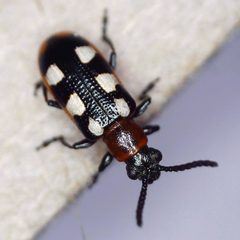
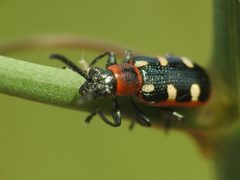
2- Crioceris(asparagus beetle)
- Lilioceris(lily leaf beetles)
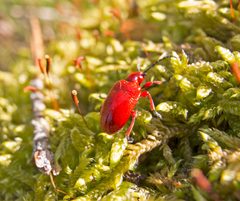
Criocerini is a tribe of leaf beetles in the Criocerinae, Chrysomelidae. Members are commonly known as shining leaf beetles. The tribe includes at least two : Crioceris and Lilioceris. These beetles are herbivorous and associated with monocot plants, particularly members of Liliaceae and related families.
Pronunciation
How to pronounce Criocerini: //kriːoʊˈsɛrɪnaɪ//
These audio files are automatically generated. While they are not always 100% accurate, they are a good starting point.
Identification
Criocerini beetles can be distinguished from other Criocerinae by their generally compact, convex body form and metallic or shiny . The tribe is characterized by antennal structure and male genitalia features that separate it from the related tribe Crioceratini. Members of Crioceris tend to have more rounded bodies, while Lilioceris often appear more elongate.
Images
Habitat
Associated with herbaceous vegetation, particularly monocotyledonous plants including lilies, asparagus, and related crops. Often found in gardens, agricultural fields, and natural areas where plants occur.
Distribution
Widely distributed across the Holarctic region, with occurring in Europe, Asia, and North America. Some species have been introduced to new regions through human activity.
Seasonality
are active primarily during spring and summer months, with timing varying by latitude and . Activity periods correspond with the growth of plants.
Diet
Herbivorous, feeding on leaves, stems, and other above-ground parts of monocotyledonous plants. Specific associations include Liliaceae (lilies, fritillaries), Asparagaceae (asparagus, Convallaria), and Amaryllidaceae.
Host Associations
- Lilium - larvae and feed on leaves and flowers
- Asparagus - major pest of cultivated asparagus
- Convallaria - larvae mine leaves
Life Cycle
Complete with , larval, pupal, and stages. Eggs are deposited on plants. Larvae feed externally or as leaf miners depending on and . occurs in soil or within plant tissues.
Behavior
are active fliers and readily move between plants. When disturbed, some release defensive secretions. Larvae of some species exhibit gregarious feeding .
Ecological Role
Herbivores that can significantly impact plant . Serve as prey for various including birds, predatory insects, and spiders. Some are considered significant agricultural pests.
Human Relevance
Several are economically important pests. Crioceris asparagi (asparagus beetle) and Crioceris duodecimpunctata (spotted asparagus beetle) damage cultivated asparagus. Lilioceris lilii (lily ) is a destructive pest of ornamental lilies and fritillaries in gardens and horticulture. Larval feeding can reduce crop yields and ornamental value.
Similar Taxa
- CrioceratiniAnother tribe in Criocerinae; distinguished by different antennal structure and genitalia
- Galerucinae of Chrysomelidae with similar leaf-feeding habits; distinguished by tarsal formula and body shape
More Details
Taxonomic note
The tribe Criocerini was established by Latreille in 1804. The classification of Criocerinae has been revised multiple times, with some authors treating Criocerini and Crioceratini as distinct tribes while others have synonymized them. Current molecular and morphological evidence supports their separation.
Pest management
Control of pest in this tribe relies on hand removal, insecticidal soaps, and synthetic . using has been investigated for asparagus beetles.