
Stenodontes chevrolati
Gahan, 1890
Chevrolat's tropical long-horned beetle
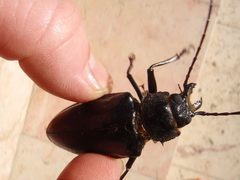
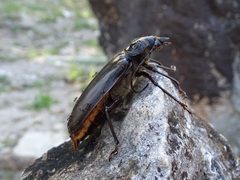
Stenodontes chevrolati is a of long-horned beetle in the Cerambycidae, Prioninae. It is one of the largest cerambycid species in North America, with males reaching substantial size. The species occurs in the Caribbean and southern North America, where are attracted to lights and have been documented in oak woodland . Larval development occurs in living oak trees, with adults emerging after several years of subterranean feeding on roots.
Pronunciation
How to pronounce Stenodontes chevrolati: //ˌstɛn.oʊˈdɒn.tiːz ˌʃɛv.roʊˈlɑːti//
These audio files are automatically generated. While they are not always 100% accurate, they are a good starting point.
Identification
Stenodontes chevrolati is among the largest long-horned beetles in North America. Males possess large, prominent and long . The can be distinguished from other large prionine cerambycids by its overall robust build and specific antennal structure. are dark in coloration. Males are generally larger than females and possess more developed mandibles.
Images
Habitat
Oak woodland and associated forested . have been documented in areas with Quercus , particularly in canyon and riparian woodland settings with oak, pine, and juniper components.
Distribution
Caribbean and North America. Specific documented localities include the Bahamas (BS), Cuba (CU), and the southwestern United States including Texas, New Mexico, and Arizona. The represents a primarily tropical/subtropical distribution extending into the southern United States.
Host Associations
- Quercus - larval Larvae develop in living oak trees, feeding on roots
- Quercus gambelii - probable larval Gambel oak associated with occurrences in New Mexico and Oklahoma
Life Cycle
Larvae develop as root borers in living oak trees, requiring several years to complete development. emerge and are active during summer months. The extended larval period is characteristic of large prionine cerambycids.
Behavior
are and strongly attracted to light sources, particularly ultraviolet and mercury-vapor lights. Males have been observed flying to light traps in significant numbers. When disturbed, adults may exhibit rapid, straight-line to escape. Adults are not known to feed; their adult lifespan appears dedicated to .
Ecological Role
As larvae, the functions as a root borer in living oak trees, potentially affecting tree health in heavily infested individuals. The species contributes to nutrient cycling through wood decomposition processes initiated by larval tunneling.
Human Relevance
are highly sought after by insect collectors due to their large size and impressive appearance. The is referenced in entomological literature as a notable example of large-bodied North American cerambycids.
Similar Taxa
- Prionus heroicusBoth are large prionine cerambycids attracted to lights; P. heroicus differs in having serrated and broader pronotum, and is active earlier in the season
- Prionus californicusSimilar large size and light attraction; P. californicus has reddish coloration and different antennal structure
- Mallodon dasystomusAnother large tropical long-horned beetle; differs in structure and geographic distribution