
Mallodon dasystomus
(Say, 1824)
hardwood stump borer
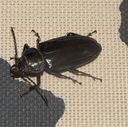
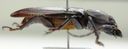
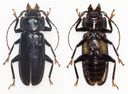
Mallodon dasystomus is a large prionine longhorned beetle native to the southern United States, ranging through Mexico and Central America to northern South America. measure 35–50 mm in length and possess conspicuously hairy mouthparts that inspired the epithet (from Greek dasus 'hairy' and stoma 'mouth'). The species is strongly associated with hardwood trees, particularly sycamores, and larvae develop in dead or dying wood. Both sexes use volatile for location, while females produce a that attracts males.
Pronunciation
How to pronounce Mallodon dasystomus: //ˈmælədɒn ˌdæsɪˈstoʊməs//
These audio files are automatically generated. While they are not always 100% accurate, they are a good starting point.
Identification
Large prionine with body length 35–50 mm. Distinguished from related by conspicuously hairy mouthparts—dense setae on the and surrounding structures that are visible without magnification. relatively short for a cerambycid, not extending beyond body length. Body robust, dark brown to blackish. Mandibles massively developed, especially in males. Pronotum with distinct lateral spines. Similar to other Mallodon species but separable by the hairy mouthpart character reflected in the species name.
Images
Habitat
Hardwood forests, particularly riparian bottomlands and wet lowland forests. Associated with standing dead or dying hardwood trees and stumps. In Missouri, found specifically in the southeastern lowlands along the Mississippi River, not occurring north of this region despite availability of trees.
Distribution
Native to the southern United States, occurring from the southeastern lowlands of Missouri southward through the Gulf Coast states. Range extends through Mexico and Central America to northern South America. Widely distributed within this range but patchy in occurrence, dependent on presence of suitable material.
Seasonality
active during summer months. In Missouri, observed at blacklights in early August. timing likely varies across the broad geographic range.
Diet
Larval development occurs in hardwood trees and stumps. Documented associations include American sycamore (Platanus occidentalis), Arizona sycamore (Platanus wrightii), oaks (Quercus spp.), sweetgum (Liquidambar styraciflua), sugarberry (Celtis laevigata), and hackberry (Celtis spp.). feeding habits not explicitly documented.
Host Associations
- Platanus occidentalis - larval American sycamore; primary in southeastern Missouri
- Platanus wrightii - larval Arizona sycamore; in southwestern US
- Quercus spp. - larval oaks
- Liquidambar styraciflua - larval sweetgum
- Celtis laevigata - larval sugarberry
- Celtis spp. - larval hackberry
Life Cycle
Larvae develop in dead or dying hardwood wood, creating large holes in trunks and branches. emerge from these holes. Specific details of -laying, larval instars, and not documented in available sources.
Behavior
Both sexes attracted to plant volatiles (sweetgum and sugarberry) in laboratory tests. Males specifically attracted to female-produced volatile . Males prefer host material containing live females over host material with males or alone. sometimes encountered at blacklights. When agitated, adults become defensive and difficult to handle for photography.
Ecological Role
Wood-boring that contributes to decomposition of dead and dying hardwood trees. Larval tunneling in stumps and trunks accelerates wood breakdown and nutrient cycling in forest .
Human Relevance
Occasional pest of potential concern; one specimen reported in international wood shipment to Canada. Otherwise minimal direct economic impact. Of interest to coleopterists due to large size and distinctive appearance.
Similar Taxa
- Mallodon downesiSimilar large prionine in same ; distinguished by lack of conspicuously hairy mouthparts
- Neandra brunneaLarge prionine with somewhat similar robust build, but has short equal-segmented and different mouthpart structure
- Prionus spp.Other large prionines with robust bodies and spined pronota, but generally larger with longer and different structure
Sources and further reading
- BugGuide
- Wikipedia
- iNaturalist taxon
- NCBI Taxonomy
- Catalogue of Life
- One-shot Wednesday: Mallodon dasystomus | Beetles In The Bush
- longhorned beetles | Beetles In The Bush | Page 7
- Cerambycidae | Beetles In The Bush | Page 7
- Not quite adult | Beetles In The Bush
- September | 2014 | Beetles In The Bush
- Miridae | Beetles In The Bush
- Role of Volatile Semiochemicals in the Host and Mate Location Behavior of Mallodon dasystomus (Coleoptera: Cerambycidae)