
Pachyta
Dejean, 1821
Species Guides
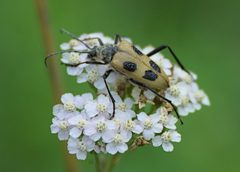
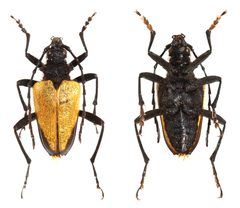
2Pachyta is a of longhorn beetles (Cerambycidae) in the Lepturinae, tribe Rhagiini. The genus contains approximately 12 described distributed across the Holarctic region. Members of this genus are associated with coniferous forests and share the characteristic short and compact body form typical of the Rhagiini.
Pronunciation
How to pronounce Pachyta: //ˈpækɪtə//
These audio files are automatically generated. While they are not always 100% accurate, they are a good starting point.
Identification
within Pachyta can be distinguished from other Rhagiini by a combination of elytral maculation patterns and body proportions. Pachyta lamed and P. quadrimaculata are particularly notable for their distinct four-spotted elytral patterns. The genus is characterized by relatively short compared to many other cerambycids, a trait shared with related genera such as Rhagium.
Images
Habitat
Coniferous forest , particularly areas with dead or dying conifer trunks. have been documented in association with Pinus, Picea, and Abies.
Distribution
Holarctic distribution, with records from Europe, Asia, and North America. Specific distribution records include Denmark, Norway, and Sweden. Individual such as Pachyta lamed and P. quadrimaculata have transcontinental ranges spanning both Eurasia and North America.
Host Associations
- Pinus - breeding substratedead trunks
- Picea - breeding substratedead trunks, particularly under bark
- Abies - breeding substratedead trunks
Similar Taxa
- RhagiumBoth belong to tribe Rhagiini and share the characteristic short and compact body form; Rhagium also breed in coniferous wood and some species (e.g., R. inquisitor) share the Holarctic distribution and winter-active stage
- AsemumHolarctic conifer-associated cerambycids with similar ecological habits; Asemum striatum is specifically mentioned as sharing transcontinental distribution pattern with Pachyta
- ArhopalusConifer-boring cerambycids with Holarctic distribution; A. rusticus specifically noted as sharing distribution pattern with Pachyta