
Saperda inornata
Say, 1824
Poplar-gall Saperda
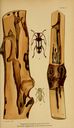
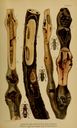
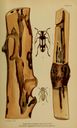
Saperda inornata is a longhorned beetle (Cerambycidae) native to North America, closely associated with trembling aspen (Populus tremuloides) throughout its . Larvae develop within living aspen trees, tunneling through wood and inner bark, while feed on bark and other tree tissues. The was described by Thomas Say in 1824 and occurs across Canada and the United States. It has been observed in Manitoba, New Brunswick, Nova Scotia, and Ontario in Canada, as well as the northern United States.
Pronunciation
How to pronounce Saperda inornata: /səˈpɛrdə ɪˈnɔrnətə/
These audio files are automatically generated. While they are not always 100% accurate, they are a good starting point.
Images
Habitat
Stands of trembling aspen (Populus tremuloides); larvae inhabit stems of aspen root suckers and twigs of larger trees, with gallery construction concentrated in tree crowns
Distribution
Canada (Manitoba, New Brunswick, Nova Scotia, Ontario) and the United States; specifically documented in Upper Michigan and northern Wisconsin
Diet
Larvae feed on wood and inner bark of trembling aspen; feed on bark and possibly other tree tissues
Host Associations
- Populus tremuloides - primary trembling aspen; required for larval development and feeding
Life Cycle
One- to two-year , duration apparently dependent on timing of deposition; larvae complete development within living trees, tunneling in wood and inner bark before emerging as
Behavior
Larval tunneling in living aspen wood and inner bark; gallery construction in tree crowns; inter- and intra-specific competition with other wood-boring cerambycids such as Oberea schaumii has been documented
Ecological Role
Wood-boring insect affecting trembling aspen; contributes to tree damage and potentially influences forest health dynamics in aspen stands
Similar Taxa
- Saperda lateraliscongeneric longhorned beetle with similar ; attacks stressed hardwoods including maples, hickories, elms, basswoods, and oaks
- Saperda candidacongeneric known as the roundheaded apple tree borer; major pest of trees in the rose
- Oberea schaumiisympatric cerambycid that shares trembling aspen as a and exhibits inter-specific competition for crown gallery space
Sources and further reading
- BugGuide
- Wikipedia
- GBIF taxonomy match
- iNaturalist taxon
- Catalogue of Life
- Pensoft Editorial Team | Blog - Part 90
- I am an Entomologist | Beetles In The Bush
- Drought, borers and dead trees - Roundheaded borers, Cerambycidae — Bug of the Week
- Recent literature – The Coleopterists Bulletin | Beetles In The Bush
- North America’s most recognizable longhorned beetle | Beetles In The Bush
- Bug Eric: From My Inbox
- Biology of Saperda inornata (Coleoptera: Cerambycidae) in Trembling Aspen, Populus Iremuloides1
- The Distribution of Saperda Inornata and Oberea Schaumii (Coleoptera: Cerambycidae) within the Crowns of Large Trembling Aspens, Populus Tremuloides