
Saperda imitans
Felt & Joutel, 1904
Oblique-banded Longhorn Beetle
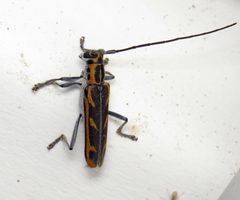
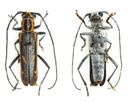
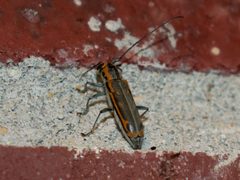
Saperda imitans is a longhorned beetle in the Cerambycidae, described by Felt and Joutel in 1904. It is a on black cherry (Prunus serotina), particularly infesting wind-damaged trees in Allegheny hardwood stands. The overwinters in sapwood and outer heartwood, causing damage that impacts commercial timber value. It is not attracted to ethanol baits and shows specific preferences for condition, targeting dying trees with moist phloem rather than completely dead or healthy specimens.
Pronunciation
How to pronounce Saperda imitans: //sæˈpɜːrdə ˈɪmɪˌtænz//
These audio files are automatically generated. While they are not always 100% accurate, they are a good starting point.
Images
Habitat
Allegheny hardwood stands; specifically wind-thrown black cherry stands in northwestern Pennsylvania. Prefers dying black cherry trees with moist phloem and epicormic branches with less than 25% live foliage. Does not infest completely uprooted dead trees or live trees with intact root systems.
Distribution
Canada (New Brunswick, Ontario, Québec) and the United States. Documented from the Kane Experimental Forest in northwestern Pennsylvania.
Seasonality
Peak occurs late May to early June (based on 2007 observation in Pennsylvania).
Host Associations
- Prunus serotina - primary wind-damaged black cherry; on dying trees with moist phloem
Life Cycle
(one per year). Overwinters as larvae in sapwood and outer heartwood of trees.
Behavior
Not attracted to ethanol baits. Shows strong preference for specific tree conditions: targets dying trees with moist phloem and epicormic branches with less than 25% live foliage, avoiding both completely uprooted dead trees and live trees with intact root systems. Gallery construction is more dense in the upper half of the first 5 meters of tree boles compared to the lower half. Low rates in branches less than 10 cm basal diameter.
Ecological Role
Impacts commercial timber value of wind-damaged black cherry through sapwood and outer heartwood damage. Acts as a secondary pest exploiting stressed or damaged trees in forest .
Human Relevance
Economic pest of black cherry timber, reducing commercial value of wind-damaged trees through internal wood damage.
Similar Taxa
- Saperda lateraliscongeneric longhorned beetle with similar associations on hardwood trees; distinguished by specific host preferences and geographic distribution
- Saperda candidacongeneric known as roundheaded apple tree borer, attacks trees in Rosaceae rather than Prunus serotina
Sources and further reading
- BugGuide
- Wikipedia
- GBIF taxonomy match
- iNaturalist taxon
- NCBI Taxonomy
- Catalogue of Life
- biodiversity | Blog - Part 42
- Drought, borers and dead trees - Roundheaded borers, Cerambycidae — Bug of the Week
- Recent literature – The Coleopterists Bulletin | Beetles In The Bush
- North America’s most recognizable longhorned beetle | Beetles In The Bush
- Bug Eric: From My Inbox
- Notes on the Biology of <i>Saperda Imitans</i> Infesting Wind-Damaged Black Cherry in Allegheny Hardwood Stands