
Neoclytus conjunctus
(LeConte, 1857)
Western Ash Borer
Neoclytus conjunctus is a of longhorned beetle in the Cerambycidae, described by LeConte in 1857. It is commonly known as the Western Ash Borer. The species belongs to the Clytini tribe, a group known for -mimicking appearance and rapid movement. Like other Neoclytus species, it is associated with woody and is distributed in western North America.
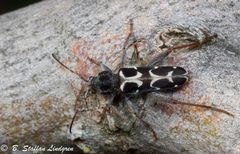
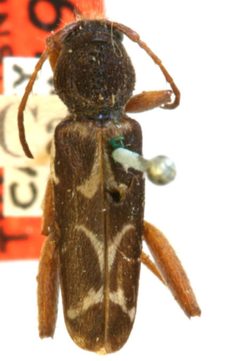
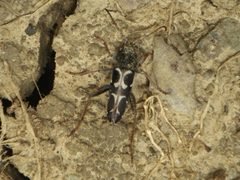
Pronunciation
How to pronounce Neoclytus conjunctus: /niːˈoʊklɪtəs kənˈdʒʌŋktəs/
These audio files are automatically generated. While they are not always 100% accurate, they are a good starting point.
Identification
Members of the Neoclytus are recognized by their -like appearance, featuring bold contrasting color patterns (typically black with yellow or white markings), rapid running , and relatively small size among cerambycids. Neoclytus conjunctus specifically can be distinguished from by its unique elytral maculation pattern, though precise diagnostic features require examination of specimens. The is smaller than many cerambycids, with likely measuring under 20 mm based on related species. are long but not exceptionally elongated relative to body length.
Images
Habitat
Associated with ash (Fraxinus) and likely other hardwood trees. Occurs in woodland and forested environments where trees are present. Favors stressed, dying, or recently dead wood rather than healthy living trees.
Distribution
Western North America. Documented from British Columbia, Canada and the western United States. The specific epithet and suggest western distribution compared to eastern like N. acuminatus.
Diet
Larvae bore into wood of ash and possibly other hardwoods, feeding on phloem and sapwood. feed on plant tissues including leaves, flowers, pollen, fruit, and nectar.
Host Associations
- Fraxinus - primary Ash trees are the favored , with larvae boring into stressed, dying, or dead wood
- hardwoods - secondary May utilize other hardwood as alternative
Life Cycle
are deposited in bark crevices of trees. Larvae tunnel beneath bark and into sapwood, feeding for most of the growing season. occurs in autumn, with in pupal chambers and emerging the following spring. Development typically completed in one year.
Behavior
are , fast-moving, and run rapidly on bark surfaces. Exhibits -mimicking including rapid, jerky movements that enhance resemblance to stinging insects. Males may guard females after mating to ensure paternity. Adults are attracted to recently dead or dying material.
Ecological Role
Acts as a decomposer and nutrient recycler in forest by breaking down dead and dying wood. Contributes to the natural recycling of lignin and cellulose in forest environments. Serves as prey for woodpeckers and other .
Human Relevance
Occasionally emerges from stored firewood brought indoors, where it may be mistaken for due to appearance and . Not a structural pest of finished wood or furniture. Does not re-infest seasoned lumber or milled wood products. No significant economic impact; primarily a curiosity when found in homes.
Similar Taxa
- Neoclytus acuminatusRed-headed Ash Borer is eastern counterpart with similar -mimic appearance and ; distinguished by distribution and subtle differences in elytral pattern
- Neoclytus capreaBanded Ash Borer shares western distribution and ash association; differs in specific banding pattern on
- Neoclytus mucronatusAnother western with similar size and general appearance; requires close examination of markings for separation
More Details
Taxonomic history
Described by John Lawrence LeConte in 1857, a prolific 19th century American entomologist who described numerous North American coleopteran . The specific epithet 'conjunctus' likely refers to the connected or joined nature of some marking pattern on the .
Sources and further reading
- BugGuide
- Wikipedia
- GBIF taxonomy match
- iNaturalist taxon
- Catalogue of Life
- Recycling ash: Banded Ash Borer, Neoclytus caprea — Bug of the Week
- One of North America’s rarer longhorned beetles | Beetles In The Bush
- Bug Eric: Wasp Wednesday: Not Wasp VII
- Bug Eric: Wasp Wednesday: Not Wasp IX
- Insects roasting on an open fire: Bess beetles, Passalidae, carpenter ants, Formicidae, darkling beetles, Tenebrionidae, and longhorn beetles, Cerambycidae — Bug of the Week
- Ascalaphidae | Beetles In The Bush